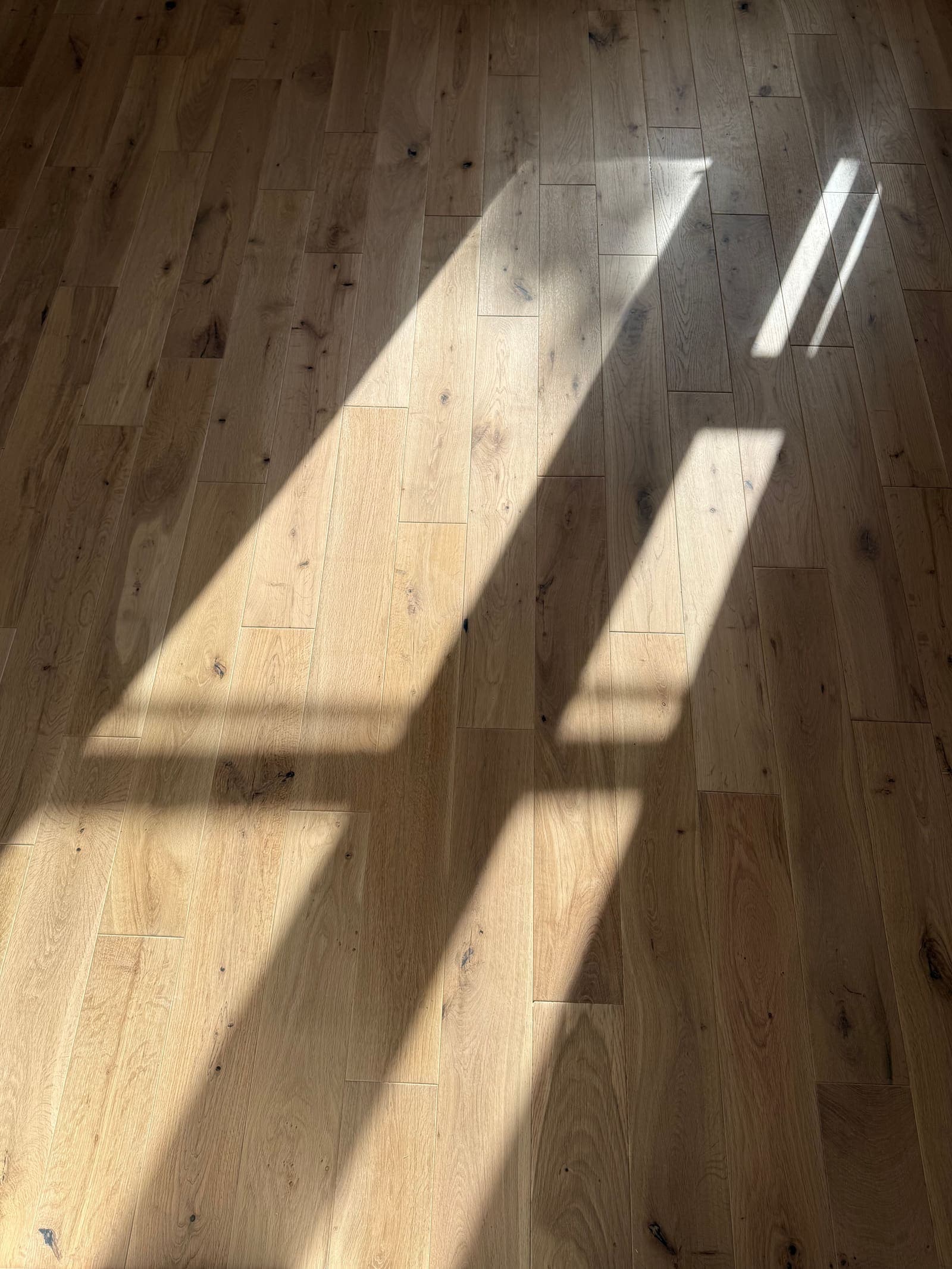
Solid Hardwood Floor Installation in Vancouver, WA
Real solid wood flooring installation — timeless beauty that can last for decades. Trust the experts at Skyview Flooring for flawless installation backed by professional craftsmanship and a 5-star track record.
We specialize in installation. You purchase the flooring from the supplier of your choice, and we are happy to recommend places to shop.
Benefits of Solid Hardwood
Discover why solid hardwood is an excellent choice for your home in the Pacific Northwest.
What Is Solid Hardwood Flooring?
Solid hardwood is milled from a single piece of wood, most commonly about three-quarters of an inch thick. The same species runs from the surface down to the tongue, so the floor can be sanded and refinished multiple times over its life.
Because it is one piece of wood, solid hardwood responds to the moisture in your home. It swells in humid months and shrinks when the air is dry, which is why it must be installed above grade, over a suitable wood subfloor, with room for that movement.
Advantages
Can be refinished several times
A full thickness of wood above the tongue allows repeated sanding. The number of times depends on the board and how much each sanding removes.
Long service life
Well-installed and maintained solid hardwood can last for decades, and some floors last much longer.
Natural character
Each board has its own grain and color, and species and stain options are extensive.
Repairable
Individual boards or areas can often be sanded, patched, or replaced.
Traditional nail-down installation
Secure attachment to a wood subfloor is a proven method for many homes.
Limitations to Consider
Seasonal movement
Boards expand and contract with humidity, which can create small gaps in winter or crowning and cupping in humid conditions.
Above grade only
Solid hardwood is not suited to basements or directly over concrete slabs.
Sensitive to water
Standing water and persistent moisture can cause warping and staining.
Can scratch and dent
Species hardness and finish matter, and softer woods show wear more easily.
Higher cost and longer timeline
Material and installation usually cost more, and boards may need to acclimate before installation.
Where Solid Hardwood Works Best
Solid hardwood is a strong choice where the subfloor and conditions suit it.
Great candidates
- Living rooms, dining rooms, and bedrooms
- Main-floor and upper-floor rooms over a wood subfloor
- Hallways and entries with good moisture control
- Homes where long-term refinishing matters
Suitable with extra consideration
- Kitchens, where spills must be cleaned promptly
- Rooms with large sunny windows, where wood can change color
- Homes with big humidity swings, where humidity control matters
Generally not recommended
- Basements and below-grade rooms
- Directly over concrete slabs
- Bathrooms and laundry rooms
- Over radiant heat, unless the specific product is approved for it
Solid Hardwood Installation Methods
Solid hardwood is typically fastened down. Other methods are only appropriate where the manufacturer specifically approves them.
Nail-down installation
Boards are blind-nailed or stapled through the tongue into a wood subfloor. This is the traditional method for three-quarter-inch solid hardwood.
Advantages
- Proven, secure attachment
- Suited to many wood-framed floors
- Reliable long-term performance when the subfloor is correct
Limitations
- Requires a wood subfloor of the right type and thickness
- Not possible over concrete
- Subfloor flatness and squeaks must be addressed first
Often a fit for: Wood subfloors, which is the most common situation
Glue-assisted or glue-down installation
Some products, often wider planks or certain thicknesses, call for adhesive in addition to nails, or for adhesive alone. This is only appropriate where the manufacturer approves it.
Advantages
- Can reduce squeaks and board movement
- Helps wider planks stay stable
- May be required by the manufacturer for some products
Limitations
- Not allowed for every product
- Adds adhesive cost and prep
- Harder to repair or remove later
Often a fit for: Products whose manufacturer specifically requires or permits it
Solid hardwood needs a wood subfloor that is clean, flat, dry, and securely fastened. It should not be floated, and it does not suit concrete. Expansion space, acclimation, and humidity control all matter, so we follow the manufacturer's instructions closely.
How Solid Hardwood Compares
Solid hardwood is a traditional choice with specific needs. Here is how it compares.
Compared with engineered hardwood
Engineered hardwood is more stable and can go in more places, including over concrete. Solid hardwood offers the most refinishing potential.
Learn about engineered hardwood installationCompared with LVP
LVP is more water-resistant and lower-maintenance, and works below grade. Solid hardwood is real wood and can be refinished.
Learn about LVP installationCompared with laminate
Laminate costs less and has a hard surface, but cannot be refinished and is sensitive to standing water.
Learn about laminate installationCompared with cork
Cork is softer underfoot and a very different look. Solid hardwood offers a classic appearance and refinishing.
Learn about cork installationSolid Hardwood Care and Durability
Solid hardwood rewards consistent care, especially around humidity.
- Sweep or vacuum regularly with a soft brush and hard-floor setting.
- Use a cleaner made for the finish, and avoid soaking the floor or using steam mops.
- Wipe spills right away and keep water away from the boards.
- Use felt pads under furniture and keep pet nails trimmed.
- Keep indoor humidity in a moderate range, which many manufacturers and industry groups recommend.
- Use rugs and window coverings to limit wear and color change in high-traffic or sunny areas.
Solid hardwood can last decades, but no floor has a guaranteed lifespan. Seasonal gaps are normal, and refinishing can restore the surface but is not unlimited.
Why Professional Solid Hardwood Installation Matters
Solid hardwood depends on the details. A subfloor that is not flat or fastened properly can cause squeaks and uneven boards. Boards installed without enough expansion space, or in a home with extreme humidity swings, can cup, crown, or gap.
Skyview Flooring was established in 2007 and has extensive flooring installation experience. We check the subfloor, discuss moisture and acclimation, and follow the manufacturer's requirements so your floor has the best chance to perform well over time.
What we check before we install
- Wood subfloor inspection and preparation
- Moisture readings and acclimation guidance
- Correct fastening and expansion space
- Transitions, stairs, and finish details
Our Installation Process
We make the solid hardwood installation process simple and stress-free.
Free Estimate
We visit your home, measure the space, and provide a detailed installation quote.
Schedule Installation
Once you have your flooring, we schedule a date that works for your family.
Professional Installation
Our expert team installs your floors with precision and care.
Final Walkthrough
We ensure everything meets our high standards and your expectations.
Pricing Factors
Every project is unique. Here are the factors that affect your solid hardwood installation cost.
Free In-Home Estimate
Get a detailed, no-obligation installation quote for your solid hardwood project. Our expert will visit your home, measure the space, and discuss your project needs.
- Accurate measurements
- Installation assessment
- Transparent pricing
- Timeline estimate
- No obligation
Solid Hardwood FAQs
Common questions about solid hardwood installation.
What Our Customers Say
Real Google reviews from homeowners who chose Skyview Flooring.
“If you are on the fence about replacing carpet with hardwood floor, go ahead and do it. You won't regret it and Skyview will take good care of you.”
Sean L.
Ridgefield, WA
“A truly well deserved 5 Stars! Hardwood floor installation completed in our new home.”
Rheddy S.
“Alex at SkyView helped us select the perfect flooring for our house. His quote was very reasonable and most importantly his workmanship along with his partner Daniel was excellent. We highly recommend SkyView Flooring.”
Ron Starker
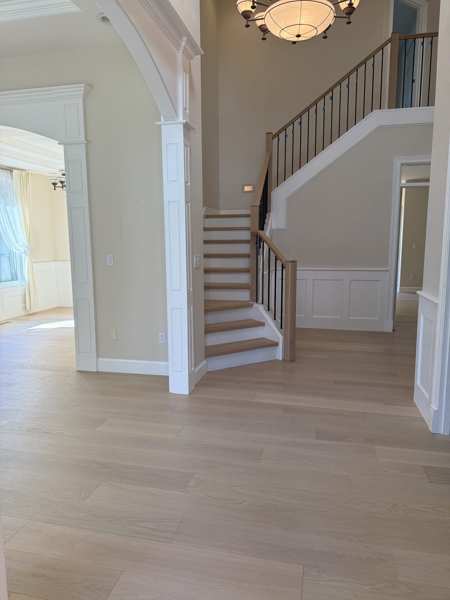
A Recent Hardwood Project
See a real hardwood installation job from start to finish.
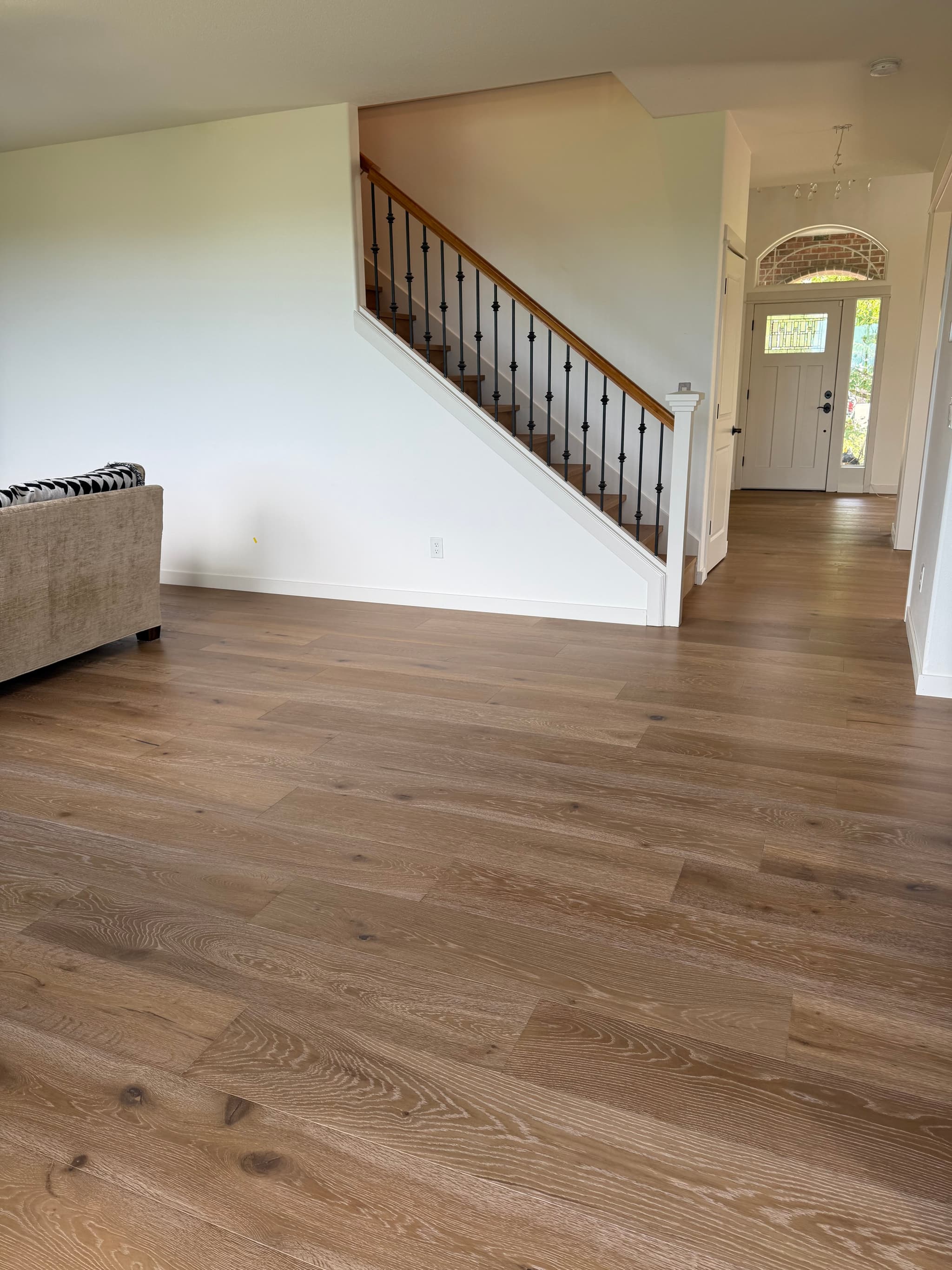
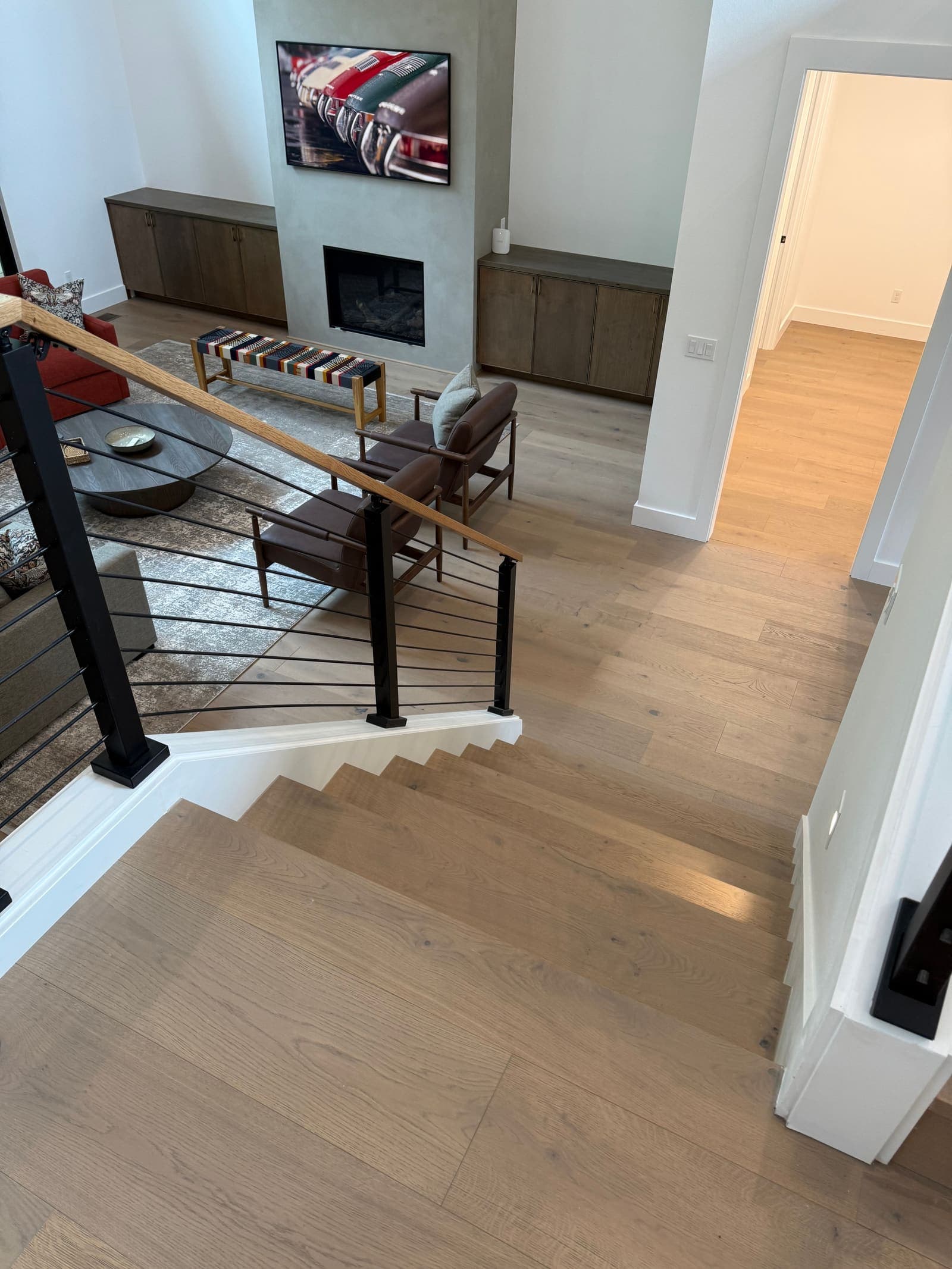
Engineered Hardwood Across Two Staircases in Ridgefield, WA
A whole-home hardwood replacement project — full-spread glue-down installation used to cut noise transfer between floors and fix subfloor squeaks along the way.
Read the Full Case StudyWhere We Install Solid Hardwood
Related services: Stair flooring · Tile installation · Commercial flooring · Project case studies
Helpful guides: Solid vs. Engineered Hardwood · LVP vs. Hardwood: How to Decide · Flooring and the Pacific Northwest Climate
Explore Our Other Services
We offer a complete range of flooring installation services.
Ready for New Hardwood Floors?
Contact us today for a free estimate on your solid hardwood installation project in Portland or Vancouver.