Flooring and the Pacific Northwest Climate: What Vancouver, WA Homeowners Should Know
Vancouver, WA and the rest of the Pacific Northwest see a lot of rain and consistently high humidity for much of the year — a different environment than the drier regions where a lot of general flooring advice gets written. That climate doesn't make flooring installation harder, exactly, but it does change which steps matter most and which materials tend to perform better in certain rooms. Here is what's worth understanding before you install.
Why Moisture Awareness Matters More Here
Wood-based flooring — solid hardwood, engineered hardwood, and to a lesser extent laminate — is a natural material that expands and contracts as it absorbs or releases moisture from the air. In a consistently dry climate, that movement is minor and predictable. In a climate like ours, where indoor humidity can shift noticeably between a wet winter and a warmer, drier summer, that movement is more pronounced. If it isn't accounted for during installation, it can show up later as gaps between boards, cupping, or in more extreme cases, buckling.
This isn't a reason to avoid wood flooring in the Pacific Northwest — hardwood floors have performed well in this region for generations. It's simply a reason why acclimation and subfloor prep aren't optional steps here; they're the steps that determine whether a floor stays flat and tight for the long run.
Acclimation: Letting the Material Adjust Before It Goes Down
Acclimation means storing flooring material inside the home, in the room where it will be installed, for a period before installation — allowing it to gradually adjust to the home's actual indoor temperature and humidity rather than whatever conditions it was manufactured, shipped, or stored under. This is standard practice across the flooring industry for solid hardwood and, to varying degrees depending on the manufacturer, engineered hardwood and laminate.
Exact acclimation windows vary by product and manufacturer, and the manufacturer's written instructions should always be the deciding factor — but the general principle is the same everywhere: don't install wood-based flooring straight off the truck. Giving it time to reach equilibrium with the room's conditions is one of the simplest, most effective ways to prevent gapping and movement later.
Subfloor Prep and Vapor Barriers
Subfloor moisture is the other half of the equation, and it matters even more in a climate where the ground and crawl spaces beneath a home can stay damp for months. Concrete slabs can wick up moisture from the ground; wood subfloors over crawl spaces or basements can pick up ambient humidity. Before installation, a professional installer should check subfloor moisture levels and flatness, and use an appropriate vapor barrier or moisture-mitigation underlayment where the flooring type and subfloor call for it.
This step is easy to skip and easy to regret skipping. Moisture that gets trapped between a subfloor and a new floor doesn't go away — it causes problems from underneath, often before anything looks wrong on the surface.
Which Flooring Types Handle PNW Moisture Best — By Room
No single flooring type is 'best' for every room. The right choice depends heavily on how much moisture exposure that specific space sees.
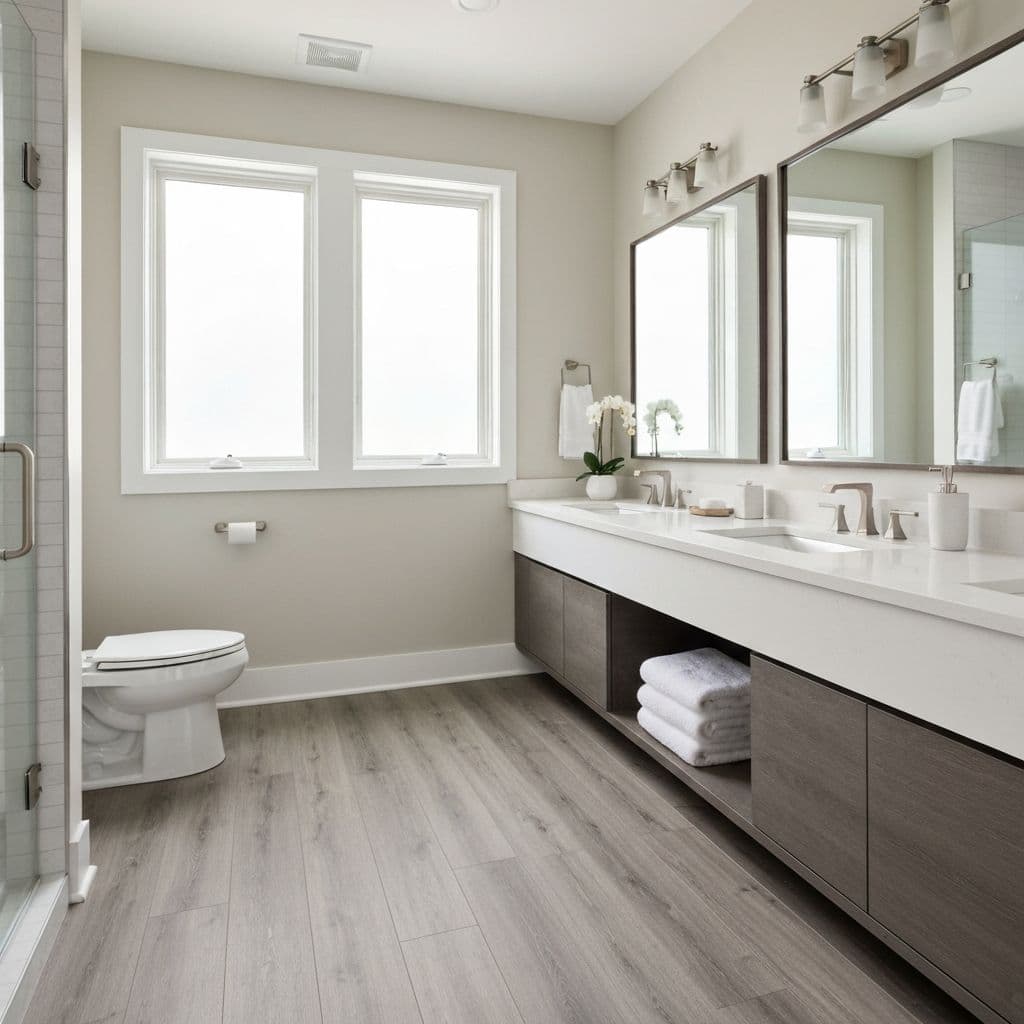
- Bathrooms — LVP (luxury vinyl plank) with a waterproof core holds up well to splashing, humidity from showers, and occasional standing water — making it one of the most forgiving choices for this room.
- Basements — LVP is again a strong option since it is not affected by ambient humidity or minor moisture the way wood-based products can be. Solid hardwood is generally not recommended below grade.
- Entryways — LVP or a well-sealed laminate handle tracked-in rain and mud well, since these products resist surface moisture and are easier to wipe down than wood.
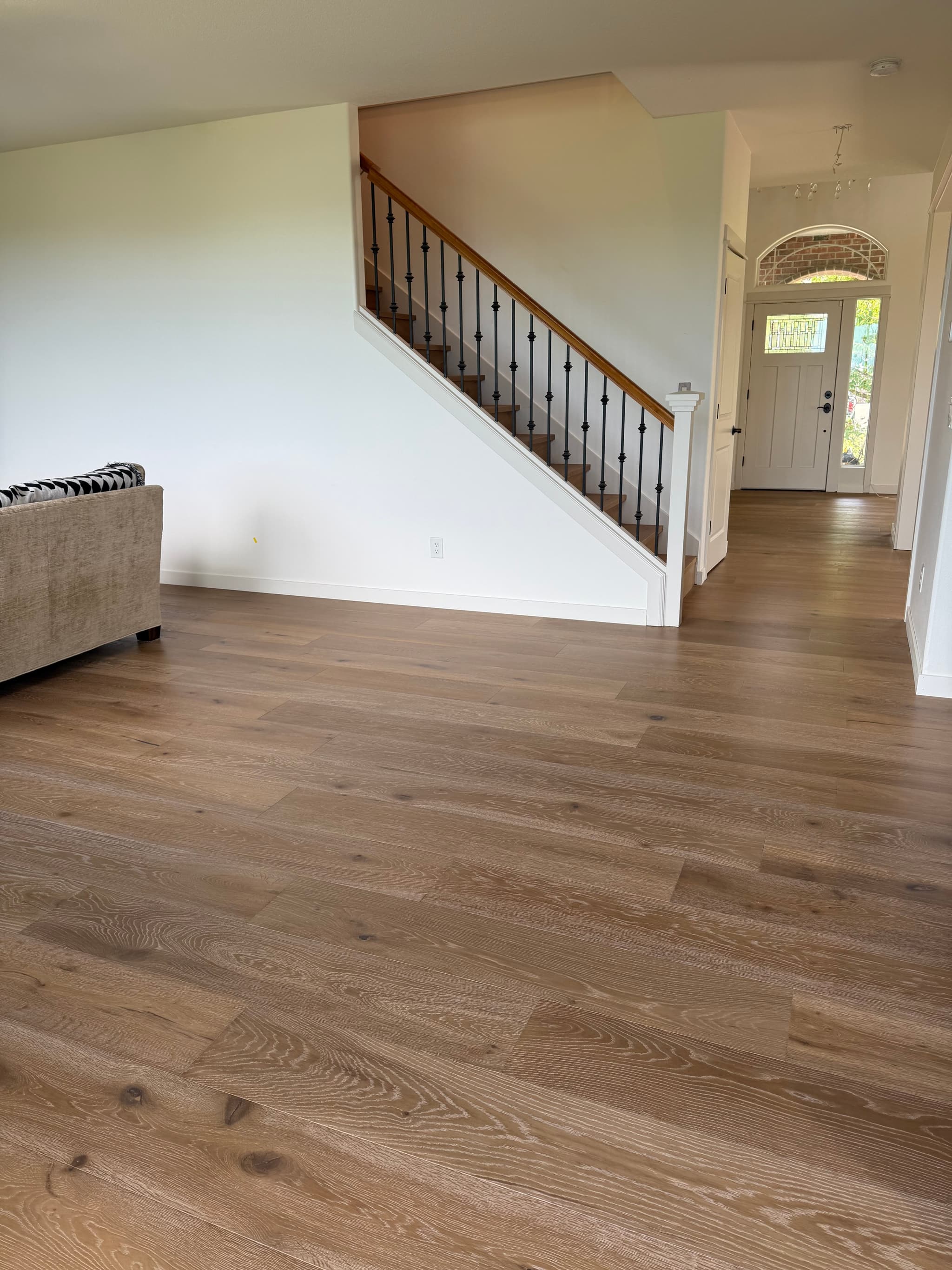
- Living rooms, bedrooms, and other main living spaces — Solid or engineered hardwood perform well here, since these rooms see normal ambient humidity rather than direct water exposure — this is where hardwood's look and feel can be enjoyed without the moisture concerns of a bathroom or entry.
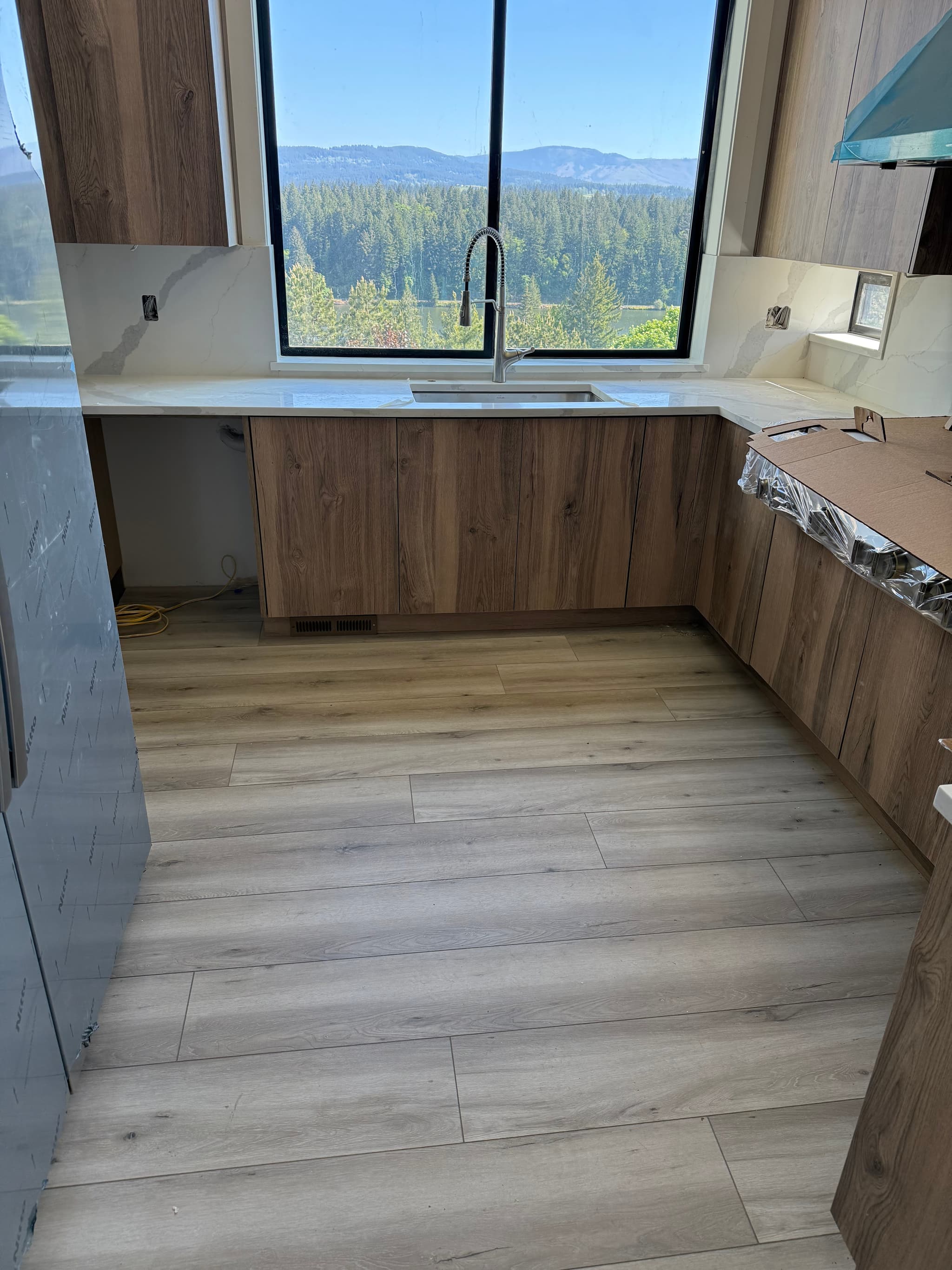
- Kitchens — LVP is a popular choice for spills and dishwasher or sink leaks; engineered hardwood can also work with reasonable care, though it carries more risk than in a living room or bedroom.
Best Practices for Keeping Floors Performing Well Through Wet Seasons
A well-installed floor, in the right room, with proper acclimation and subfloor prep, generally doesn't need special seasonal treatment. That said, a few habits help any flooring type hold up better through a Pacific Northwest winter:
- Wipe up standing water promptly — especially near entryways, mudrooms, and under boot trays — even water-resistant flooring benefits from not sitting in puddles.
- Use entry mats — to catch rain and mud before it tracks across the home, reducing both moisture and grit that can scratch flooring surfaces.
- Keep indoor humidity reasonably stable — if your home has forced air heating or a whole-house humidity control system, keeping conditions consistent year-round reduces the amount of expansion and contraction wood-based floors go through.
- Address leaks and moisture sources quickly — a slow plumbing leak or a damp crawl space left unaddressed will affect flooring above it eventually, regardless of how well the floor itself was installed.
How Skyview Flooring Approaches This
Skyview Flooring LLC is a family-owned, installation-only flooring contractor that has operated in Vancouver, WA since 2007, and we install engineered hardwood, solid hardwood, laminate, LVP, and carpet across Clark County and the greater Portland metro area. Because acclimation timelines and moisture-mitigation needs vary by product and by subfloor, we assess each job individually rather than applying a one-size-fits-all process — the goal is a floor that stays flat and performs well for years, not just on installation day.