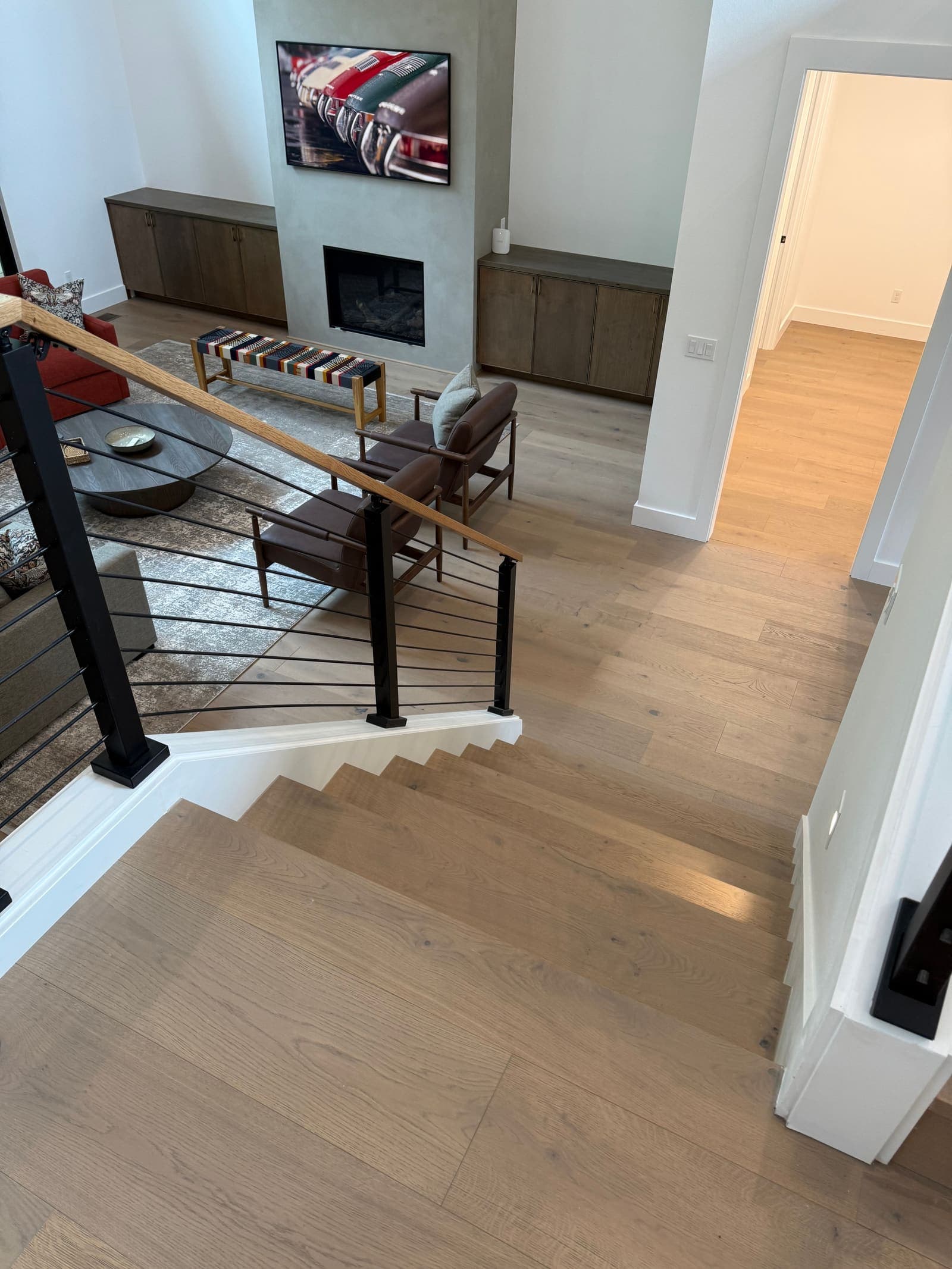
Engineered Hardwood Installation in Vancouver, WA
Expert engineered hardwood installation with timeless beauty and lasting durability. Trust the experts at Skyview Flooring for flawless installation backed by professional craftsmanship and a 5-star track record.
We specialize in installation. You purchase the flooring from the supplier of your choice, and we are happy to recommend places to shop.
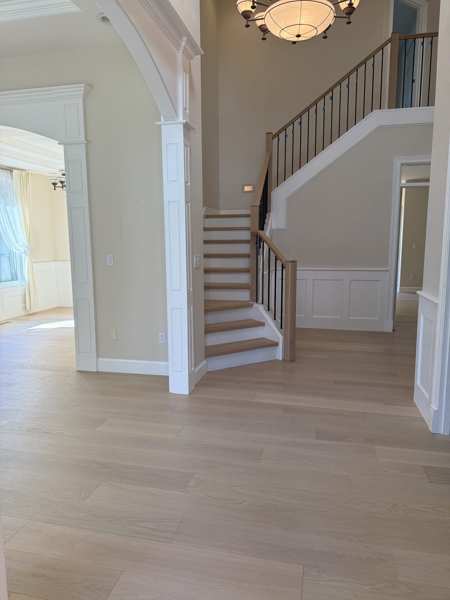
See a recent project: Engineered hardwood in Ridgefield, WA
Benefits of Engineered Hardwood
Discover why engineered hardwood is an excellent choice for your home in the Pacific Northwest.
What Is Engineered Hardwood?
Engineered hardwood is real wood flooring built in layers. A top layer of solid hardwood, called the wear layer, sits on a plywood or fiberboard core. Because the layers run in different directions, the plank is more dimensionally stable than a solid board when humidity and temperature change.
Wear layer thickness varies widely, from very thin to several millimeters. That thickness determines how many times a floor can be sanded and refinished, if at all, so it is one of the most important specifications to check when shopping.
Advantages
Real wood appearance
The surface is genuine hardwood, with natural grain and variation.
Greater stability
The layered build resists the seasonal swelling and shrinking that affects solid planks, though it does not eliminate movement.
Flexible installation options
Depending on the product, it can be floated, glued down, or nailed, and many products can go over concrete when approved.
Refinishing potential
Products with a thicker wear layer can often be sanded and refinished. Thin wear layers may allow a light screen and recoat only.
Radiant heat compatibility
Many engineered products are approved for use over radiant heat with the manufacturer's temperature limits.
Limitations to Consider
Higher cost than laminate or LVP
Real-wood surfaces generally cost more, and prices rise with thicker wear layers and wider planks.
It can scratch and dent
Softer species and lighter finishes show wear sooner. Pets, grit, and furniture all matter.
Still sensitive to water and humidity
It is more stable than solid hardwood, but standing water and extreme humidity swings can cause cupping or gaps.
Refinishing depends on the product
A thin wear layer limits or rules out sanding, so refinishing is not guaranteed.
Quality varies widely
Core construction, wear layer, and finish quality differ between brands.
Where Engineered Hardwood Works Best
Engineered hardwood suits many rooms where real wood is the goal, including some that solid hardwood cannot handle.
Great candidates
- Living rooms, dining rooms, and bedrooms
- Main-floor and upper-floor installations
- Over concrete slabs, when approved by the manufacturer and moisture is tested
- Homes with radiant heat, with an approved product
- Open-plan homes where a continuous floor is wanted
Suitable with extra consideration
- Basements, only with an approved product and moisture testing
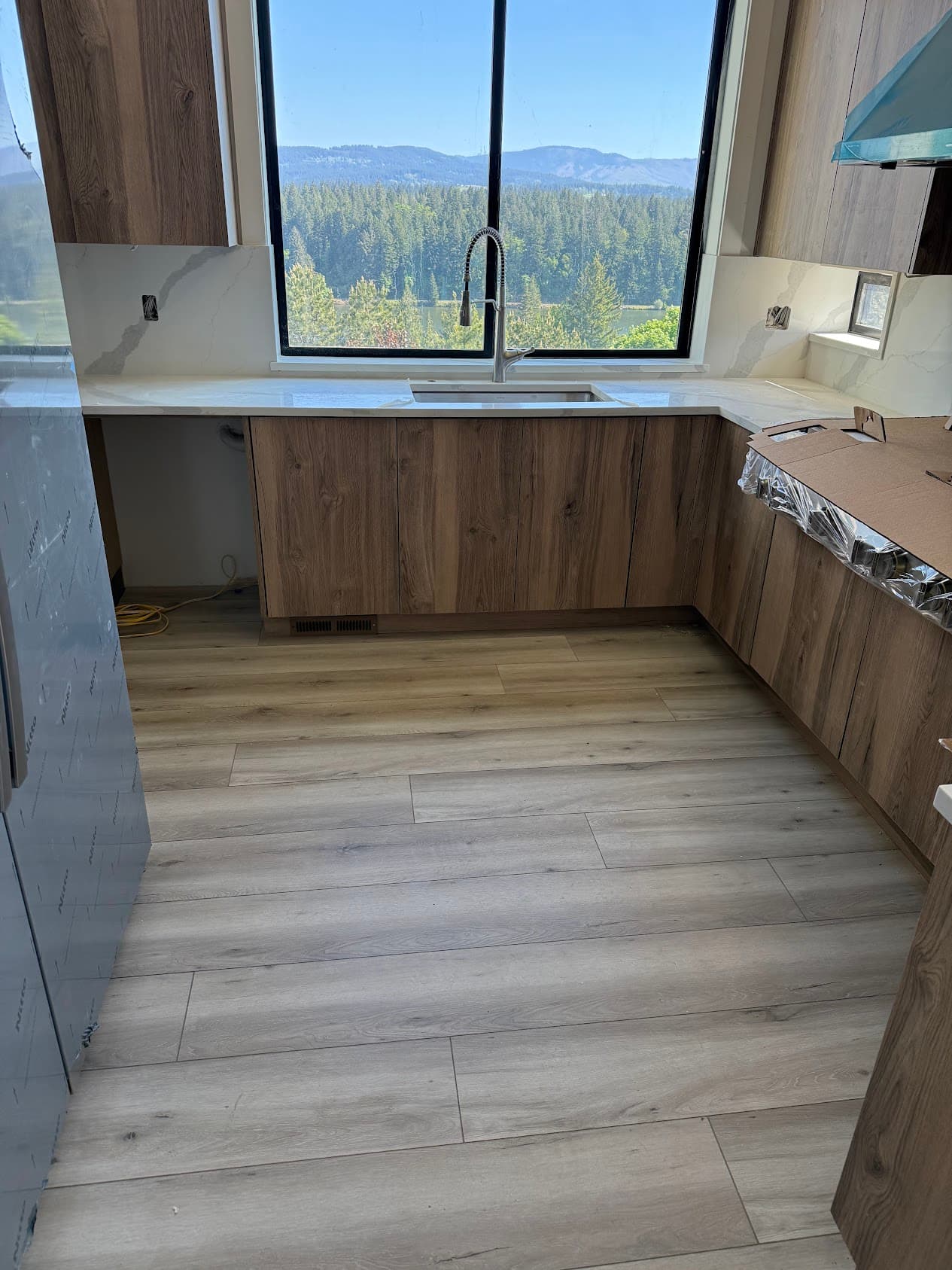
- Kitchens, with prompt cleanup of spills
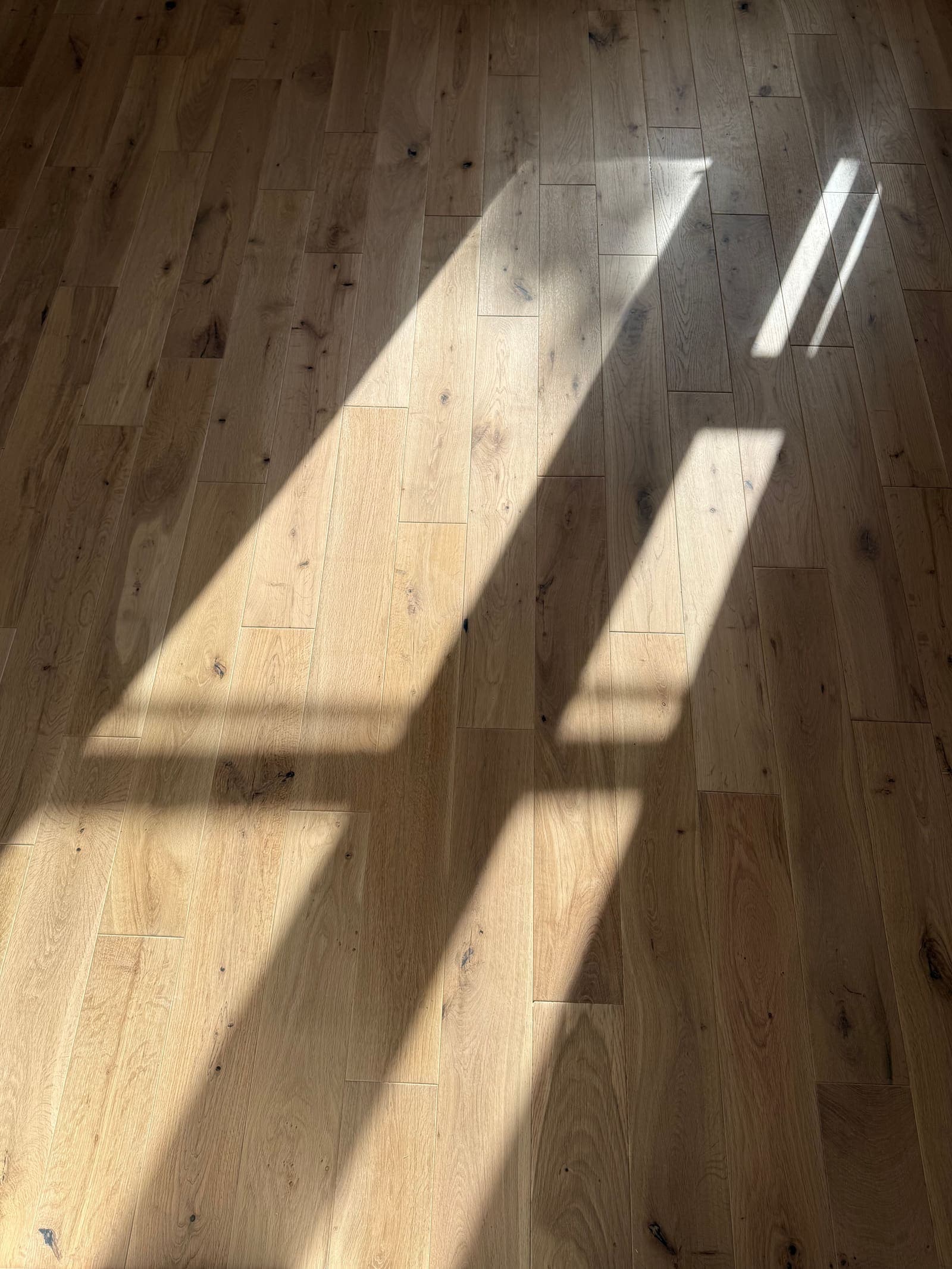
- Rooms with large sunny windows, where wood can fade or change color
Generally not recommended
- Bathrooms and laundry rooms with regular water exposure
- Areas with frequent standing water or high ongoing moisture
Engineered Hardwood Installation Methods
Engineered hardwood can be installed several ways, but not every product allows every method. The manufacturer specifies which methods and subfloors are approved.
Floating installation
Planks are glued or locked to each other and rest on an underlayment without being fastened to the subfloor. This is only appropriate where the product permits it.
Advantages
- No fastening to the subfloor
- Works over many subfloor types when approved
- Often quicker to install
Limitations
- Can feel and sound less solid than glued or nailed floors
- Needs expansion space around the perimeter
- Not allowed for all products or wider planks
Often a fit for: Products approved for floating, over a flat, dry subfloor
Glue-down installation
Planks are bonded to the subfloor with an approved adhesive, either full-spread or in a pattern the manufacturer specifies.
Advantages
- Solid feel and reduced hollow sound
- Works over concrete and other approved subfloors
- Can help with sound transfer between floors
Limitations
- Demanding subfloor prep and moisture testing
- Adhesive requirements are specific
- Harder to remove or repair later
Often a fit for: Concrete slabs, multi-story homes, and products that require it
Nail-down or glue-assisted nail-down
Planks are fastened to a wood subfloor with nails or staples, and some products also call for adhesive on top of the fasteners.
Advantages
- Traditional, secure attachment to a wood subfloor
- Glue-assist can reduce squeaks and movement
- Suited to many wood-framed homes
Limitations
- Requires a wood subfloor of the right type and thickness
- Not possible over concrete without specific systems
- Not every plank is designed to be nailed
Often a fit for: Wood-framed floors with a compatible plywood or OSB subfloor
Subfloor compatibility and manufacturer requirements decide the method. Using a method the manufacturer does not approve can affect the warranty and the long-term result, so we confirm the instructions for your product first.
How Engineered Hardwood Compares
Engineered hardwood is often the choice for homeowners who want real wood with fewer limitations.
Compared with solid hardwood
Solid hardwood has the most refinishing potential, but it is less stable and cannot go below grade. Engineered is more flexible about where it can be installed.
Learn about solid hardwood installationCompared with LVP
LVP is more water-resistant and lower-maintenance, while engineered hardwood is real wood and can often be refinished.
Learn about LVP installationCompared with laminate
Laminate costs less and has a harder surface but cannot be refinished and is more sensitive to standing water.
Learn about laminate installationCompared with cork
Cork is softer and warmer underfoot, with a very different look and care routine. Engineered hardwood has a more traditional feel.
Learn about cork installationEngineered Hardwood Care and Durability
Engineered hardwood needs a bit more attention than vinyl or laminate, mainly around moisture and finish.
- Sweep or vacuum regularly with a soft brush and a hard-floor setting.
- Use a cleaner made for the finish, and avoid soaking the floor or using steam mops.
- Wipe spills right away and keep water away from seams.
- Use felt pads under furniture and keep pet nails trimmed.
- Keep indoor humidity within a moderate range, which many manufacturers recommend.
- Use rugs or window coverings in very sunny spots to limit color change.
Hardwood can scratch and dent, and no finish makes it scratchproof. Refinishing is only possible on products with enough wear layer, so check this before you buy.
Why Professional Engineered Hardwood Installation Matters
Engineered hardwood has the most installation variables of any floor. Method, adhesive, subfloor type, moisture, and manufacturer approvals all interact. A product that is fine over a wood subfloor may not be approved over concrete, and the wrong adhesive or method can affect the warranty.
Skyview Flooring was established in 2007 and has extensive flooring installation experience, including full-spread glue-down installations in multi-story homes. We review the product requirements, test the subfloor where needed, and install to the manufacturer's specifications.
What we check before we install
- Method matched to the product and subfloor
- Moisture testing on concrete and other subfloors
- Correct adhesive and fastening
- Expansion space, transitions, and stair details
Our Installation Process
We make the engineered hardwood installation process simple and stress-free.
Free Estimate
We visit your home, measure the space, and provide a detailed installation quote.
Schedule Installation
Once you have your flooring, we schedule a date that works for your family.
Professional Installation
Our expert team installs your floors with precision and care.
Final Walkthrough
We ensure everything meets our high standards and your expectations.
Pricing Factors
Every project is unique. Here are the factors that affect your engineered hardwood installation cost.
Free In-Home Estimate
Get a detailed, no-obligation installation quote for your engineered hardwood project. Our expert will visit your home, measure the space, and discuss your project needs.
- Accurate measurements
- Installation assessment
- Transparent pricing
- Timeline estimate
- No obligation
Engineered Hardwood FAQs
Common questions about engineered hardwood installation.
What Our Customers Say
Real Google reviews from homeowners who chose Skyview Flooring.
“Had engineered hardwood installed. We wanted someone local to us in Vancouver WA and this family business did a great job.”
Ілля П.
Vancouver, WA
“If you are on the fence about replacing carpet with hardwood floor, go ahead and do it. You won't regret it and Skyview will take good care of you.”
Sean L.
Ridgefield, WA
“A truly well deserved 5 Stars! Hardwood floor installation completed in our new home.”
Rheddy S.
Real Projects from Our Customers
Recent jobs, described in our customers’ own Google reviews.
Engineered Hardwood, Custom Stair Noses and LVP Basement
Battle Ground, WA
Subfloor areas that needed attention were addressed before installation. Engineered hardwood went on the main floor, the staircase and the upstairs bedrooms with custom stair noses, and LVP went in the basement over concrete.
“The finished floors turned out beautiful and feel solid with no movement or squeaking.”
A Recent Engineered Hardwood Project
See a real engineered hardwood installation job from start to finish.
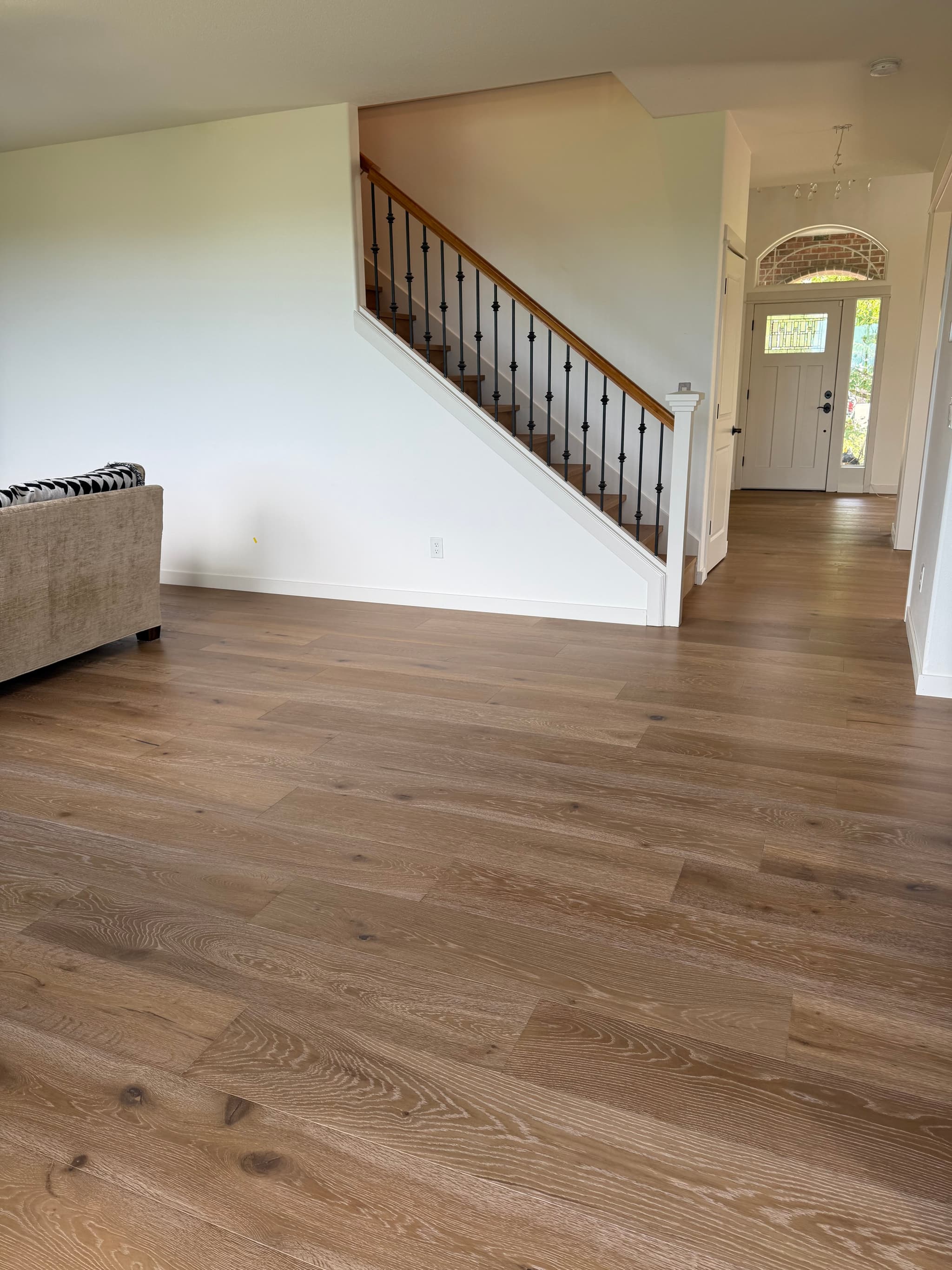
Engineered Hardwood Across Two Staircases in Ridgefield, WA
2,740 sq ft of engineered hardwood installed with full-spread glue-down for sound reduction, across two floors and two staircases in a three-story Ridgefield home.
Read the Full Case StudyIn 2026, Skyview Flooring was selected for the NW Street of Dreams and installed engineered hardwood throughout a 5,734 sq ft home.
Where We Install Engineered Hardwood
Related services: Stair flooring · Tile installation · Commercial flooring · Project case studies · Cork flooring
Helpful guides: Solid vs. Engineered Hardwood · LVP vs. Hardwood: How to Decide · Flooring and the Pacific Northwest Climate
Explore Our Other Services
We offer a complete range of flooring installation services.
Ready for New Engineered Hardwood Floors?
Contact us today for a free estimate on your engineered hardwood installation project in Portland or Vancouver.