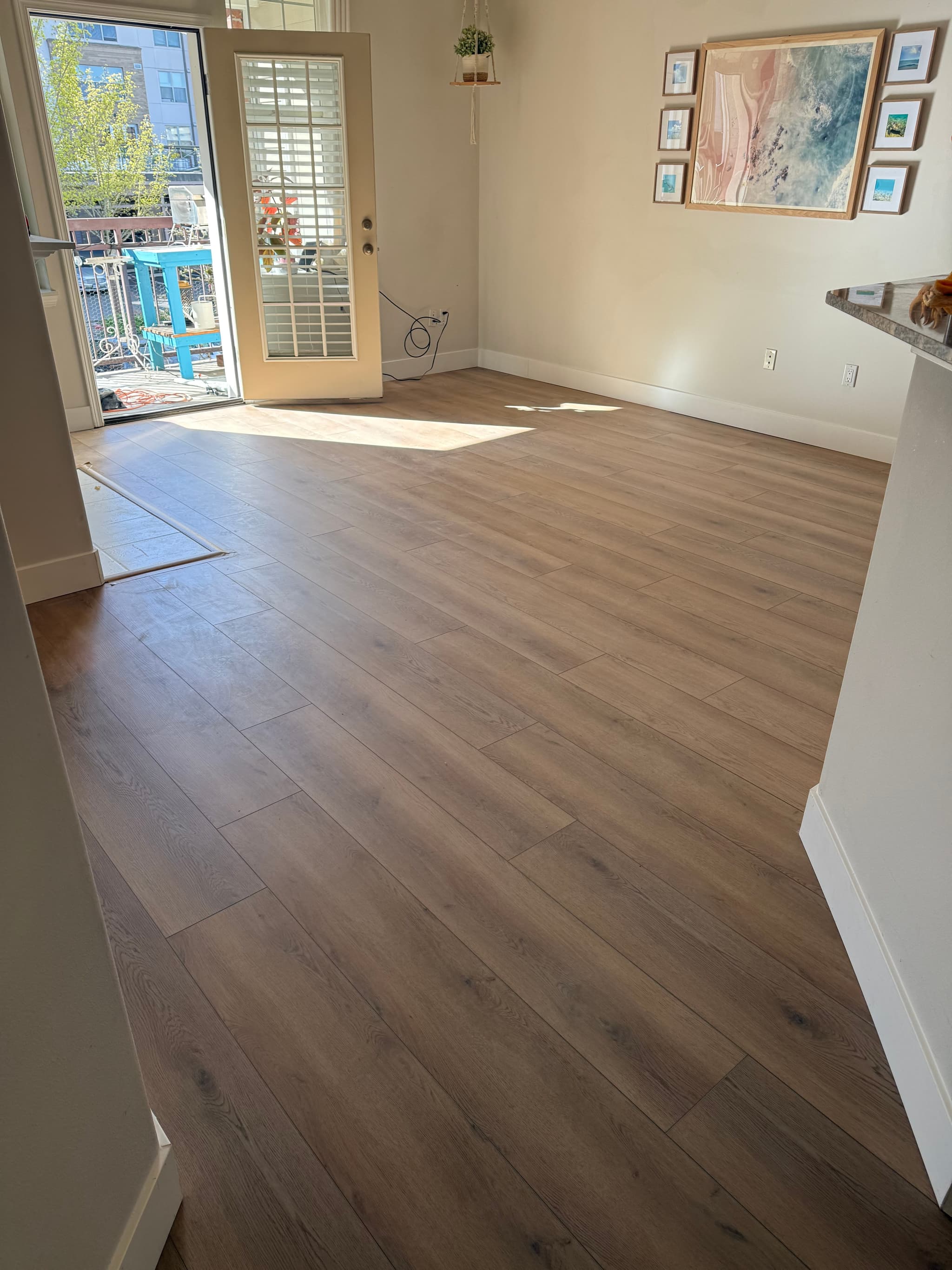
LVP / Luxury Vinyl Plank Installation in Vancouver, WA
Expert LVP installation — waterproof-core flooring, a strong choice for kitchens, baths and busy rooms. Trust the experts at Skyview Flooring for flawless installation backed by professional craftsmanship and a 5-star track record.
We specialize in installation. You purchase the flooring from the supplier of your choice, and we are happy to recommend places to shop.
Benefits of LVP / Luxury Vinyl Plank
Discover why LVP is an excellent choice for your home in the Pacific Northwest.
What Is Luxury Vinyl Plank (LVP)?
Luxury vinyl plank is a multi-layer synthetic floor. A clear wear layer sits on top of a printed image layer that reproduces wood or stone, and underneath is a core that gives the plank its stiffness. Many products add an attached foam or cork pad on the back.
The core is what separates one LVP from another. Rigid cores (often sold as SPC or WPC) are stiff and resist denting and subfloor telegraphing better. Thinner flexible vinyl planks are usually glued down and follow the subfloor more closely. Thickness, wear layer, and core type all vary a lot by brand, so two products that look alike can perform very differently.
Advantages
Water-resistant core
The planks themselves are not damaged by water the way wood-fiber products can be. Seams, edges, and the subfloor underneath still matter, so it is not a substitute for fixing a leak.
Comfortable and quiet underfoot
Products with an attached pad or a suitable underlayment feel softer than tile and reduce footstep noise.
Wide range of looks
Convincing wood, stone, and tile patterns in many plank widths and colors.
Low-maintenance routine
Sweeping and damp mopping with an appropriate cleaner covers most day-to-day care.
Practical on concrete
Many products can go over a flat, dry concrete slab when the manufacturer's moisture requirements are met.
Limitations to Consider
It can dent and scratch
Heavy point loads such as furniture legs and dropped objects can leave marks, and grit can dull the wear layer over time.
It cannot be refinished
Unlike hardwood, a worn surface cannot be sanded. Repairs usually mean replacing planks.
Temperature sensitivity
Vinyl expands and contracts with temperature. Rooms with strong direct sun or very cold conditions may need a product rated for them.
Quality varies widely
Wear layer, core, and locking system differ between products, which affects how a floor holds up.
Subfloor flaws can show
Thin, flexible planks, especially glued down, can reveal ridges, trowel marks, or seams below if the subfloor is not properly prepared.
Where LVP Works Best
LVP is one of the most versatile options, but the right product and method depend on the room and the subfloor.
Great candidates
- Kitchens
- Bathrooms and laundry rooms
- Basements, after the slab passes the manufacturer's moisture test
- Entryways and mudrooms
- Whole-home installations
- Rentals and busy family spaces
Suitable with extra consideration
- Rooms with large windows or direct sun, where heat can cause expansion
- Over radiant heat, which requires a product approved for it and temperature limits
- Under heavy appliances or built-in islands, which should not sit on a floating floor unless the manufacturer allows it
Generally not recommended
- Over a subfloor that is uneven, damaged, or wet and has not been corrected
- Outdoor or unconditioned spaces unless the product is specifically rated for them
LVP Installation Methods
There are two common ways to install LVP. Which one is allowed depends on the specific product, because each manufacturer specifies how its planks must be installed.
Floating click-lock installation
Planks lock together at the edges and rest on the subfloor without being adhered to it. This is the most common method for rigid-core LVP.
Advantages
- Typically faster to install
- Works over many existing hard surfaces when they are flat and sound
- Easier to remove and replace later
Limitations
- Needs perimeter expansion gaps hidden under trim
- Can sound more hollow without a suitable pad
- Heavy cabinetry and fixed islands are generally not placed on top
Often a fit for: Most residential rooms with a flat, dry subfloor
Glue-down installation
Planks are bonded to the subfloor with the manufacturer's approved adhesive. These are usually thinner, flexible planks.
Advantages
- Solid, quiet feel with no floating movement
- Stays stable under rolling loads and heavy furniture
- Can run continuously under cabinets where the manufacturer allows it
Limitations
- More demanding subfloor prep because imperfections can show through
- Adhesive and moisture requirements are strict
- Harder to remove later
Often a fit for: Large open areas, high-traffic spaces, and projects where a product calls for it
The two methods are not interchangeable. A click-lock plank should not be glued down, and a glue-down plank cannot be floated. We confirm the manufacturer's installation instructions for the product you choose before we quote the work.
How LVP Compares
A quick way to think about how LVP stacks up against the other floors homeowners usually consider.
Compared with laminate
LVP has a synthetic core and handles moisture better. Laminate uses a wood-fiber core and often has a harder, more scratch-resistant surface but is more sensitive to standing water.
Learn about laminate installationCompared with engineered hardwood
Engineered hardwood is real wood and can often be refinished, but it costs more and is more sensitive to water. LVP is a lower-maintenance choice for wet or high-traffic rooms.
Learn about engineered hardwood installationCompared with solid hardwood
Solid hardwood offers the most refinishing potential but is not suited to below-grade rooms. LVP is the more practical option in basements and bathrooms.
Learn about solid hardwood installationCompared with cork
Cork is warmer and softer underfoot but needs more care around water and sunlight. LVP is generally easier to maintain in busy areas.
Learn about cork installationLVP Care and Durability
LVP is a low-maintenance floor, but a few habits help it last.
- Sweep or vacuum regularly, using a hard-floor setting rather than a beater bar.
- Damp mop with a cleaner the manufacturer approves. Avoid abrasive pads and steam mops unless the maker allows them.
- Wipe up spills and pet accidents promptly, and fix leaks rather than relying on the waterproof core.
- Use felt pads under furniture and avoid dragging heavy items.
- Skip rubber-backed mats, which can discolor some vinyl. Choose mats labeled safe for vinyl.
- Use blinds or shades in rooms with strong direct sunlight to limit heat and fading.
No floor is scratchproof or dent-proof. Pets with long nails, grit, and heavy furniture can all leave marks over time.
Why Professional LVP Installation Matters
Most LVP problems trace back to the subfloor, not the plank. Gaps, peaking, and visible ridges often come from an uneven subfloor, missing expansion space, or moisture that was not tested. Manufacturer instructions also affect warranty coverage, so how a floor is installed matters.
Skyview Flooring has been installing flooring since 2007. Before we install, we check the subfloor, discuss moisture where it applies, and follow the manufacturer's requirements for the product you have chosen.
What we check before we install
- Subfloor flatness and repair
- Moisture testing and vapor protection where required
- Correct method for the specific product
- Expansion gaps, transitions, and trim details
Our Installation Process
We make the LVP installation process simple and stress-free.
Free Estimate
We visit your home, measure the space, and provide a detailed installation quote.
Schedule Installation
Once you have your flooring, we schedule a date that works for your family.
Professional Installation
Our expert team installs your floors with precision and care.
Final Walkthrough
We ensure everything meets our high standards and your expectations.
Pricing Factors
Every project is unique. Here are the factors that affect your LVP installation cost.
Free In-Home Estimate
Get a detailed, no-obligation installation quote for your LVP project. Our expert will visit your home, measure the space, and discuss your project needs.
- Accurate measurements
- Installation assessment
- Transparent pricing
- Timeline estimate
- No obligation
LVP / Luxury Vinyl Plank FAQs
Common questions about LVP installation.
What Our Customers Say
Real Google reviews from homeowners who chose Skyview Flooring.
“Very satisfied of the work the floor installer did, quality LVP installation was done in the main areas and carpet installation in the bedrooms.”
Dima C.
“Skyview Flooring did an amazing job on my LVP flooring! From start to finish, the experience was excellent. Completed LVP installation in Hillsboro with a new staircase.”
Jessica F.
Hillsboro, OR
“I just had a small job to complete, I wanted LVP installed in the office and they were able to do it the next day. Will definitely be using them once I'm ready to remodel the full house!”
Matthew Z.
Real Projects from Our Customers
Recent jobs, described in our customers’ own Google reviews.
Carpet to LVP, Including Stairs
Ellsworth Springs, Vancouver, WA
Old carpet replaced with LVP, including the stairs, from the initial consult to the final walkthrough.
“They were fully transparent with any issues that arose and always responded promptly to communication.”
LVP Game Room
Vancouver, WA
LVP installed in a game room. We helped the homeowner find the materials they had in mind.
“Daniel was super helpful in locating materials for the lvp installation that were just what I had in mind.”
Engineered Hardwood, Custom Stair Noses and LVP Basement
Battle Ground, WA
Subfloor areas that needed attention were addressed before installation. Engineered hardwood went on the main floor, the staircase and the upstairs bedrooms with custom stair noses, and LVP went in the basement over concrete.
“The finished floors turned out beautiful and feel solid with no movement or squeaking.”
A Recent LVP Project
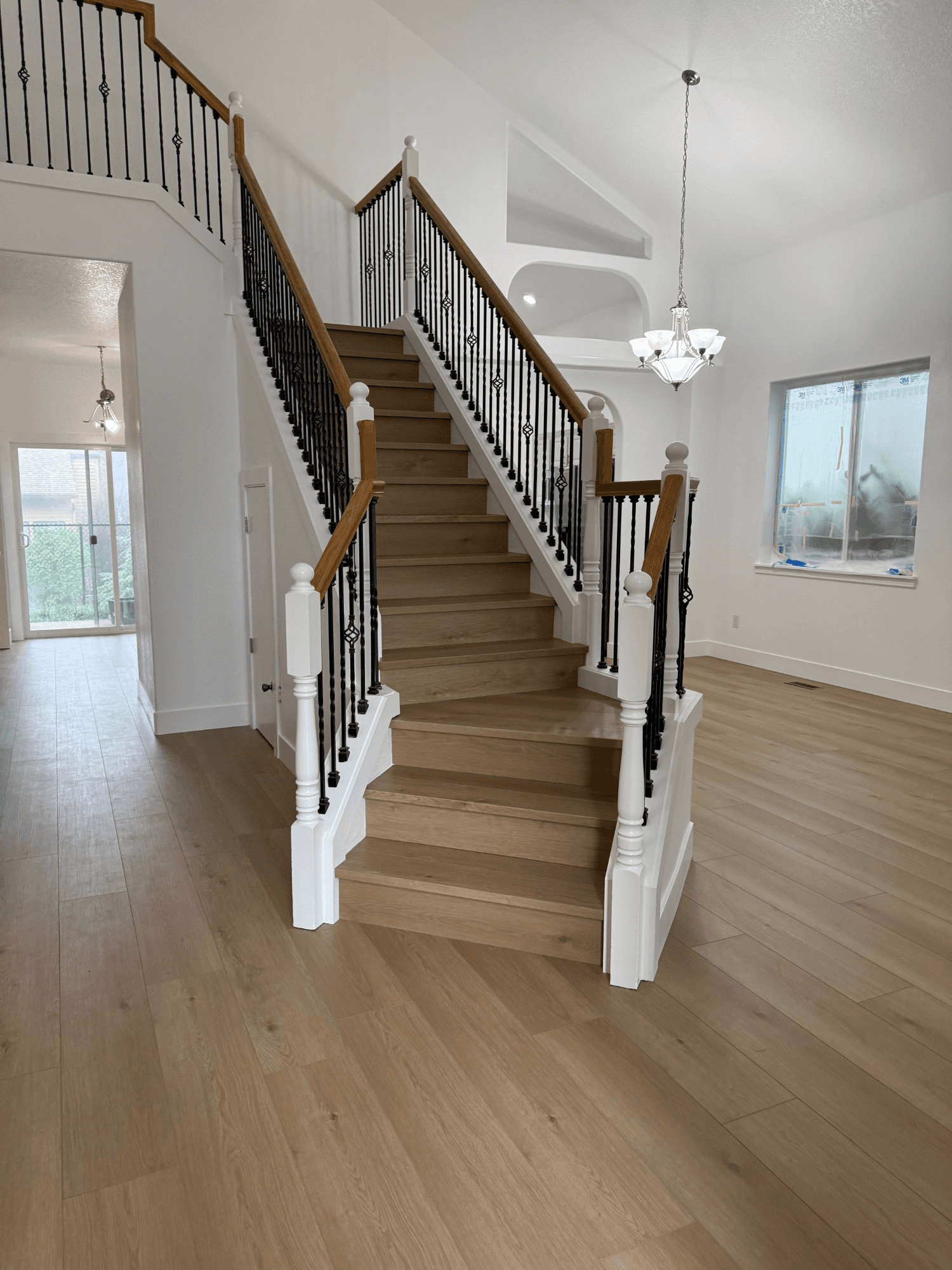
LVP Installation with Stairs and Baseboards
Vancouver / Battle Ground area, WA
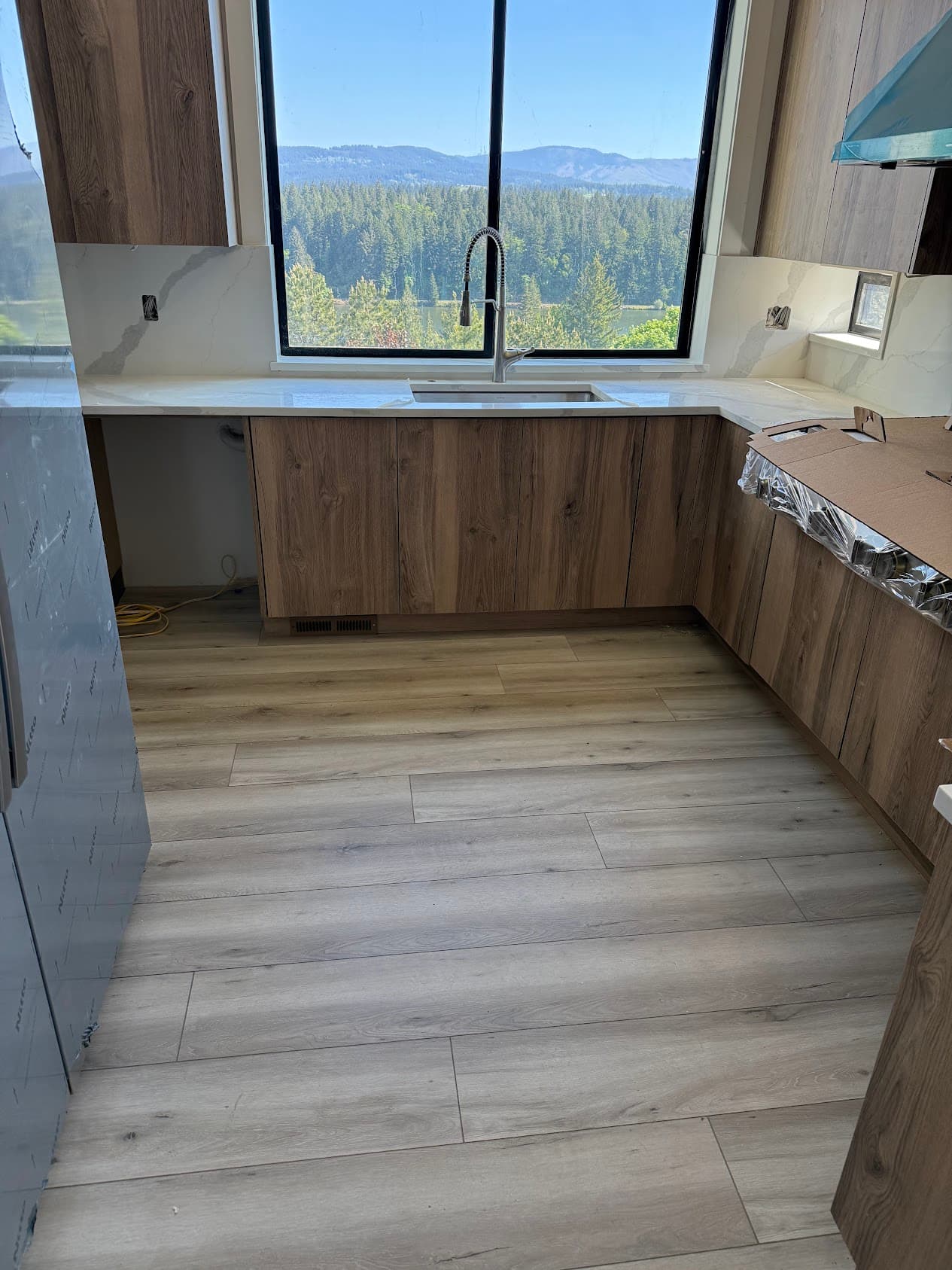
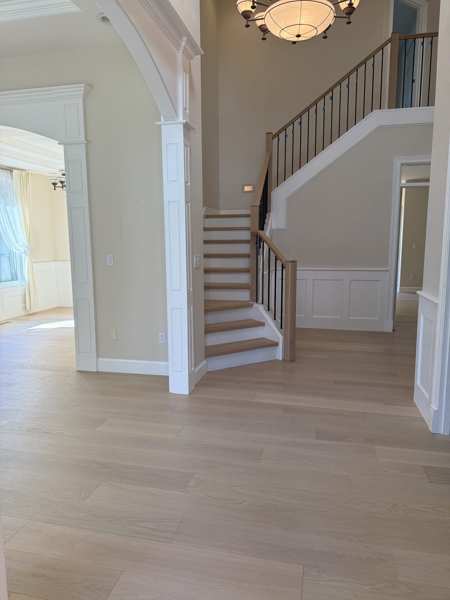
About 3,700 sq ft of carpet replaced with LVP throughout the bedrooms, the entire downstairs and the staircase. The kitchen LVP was replaced too for a consistent finish, existing tile in the laundry room and bathroom was kept, and new baseboards were installed throughout.
Read more reviews“The quality of the work and attention to detail really stood out, especially with a project of this size.”
Where We Install LVP
Related services: Stair flooring · Tile installation · Commercial flooring · Project case studies · Cork flooring
Helpful guides: LVP vs. Hardwood: How to Decide · Flooring Installation Cost in Vancouver, WA · Flooring and the Pacific Northwest Climate
Explore Our Other Services
We offer a complete range of flooring installation services.
Ready for New LVP Floors?
Contact us today for a free estimate on your LVP installation project in Portland or Vancouver.