
Cork Flooring Installation in Vancouver, WA
Discover the natural comfort, warmth, and distinctive appearance of cork flooring. Learn whether cork is the right choice for your home and explore professional installation with Skyview Flooring.
What Is Cork Flooring?
Cork flooring starts with the bark of the cork oak tree. The bark is stripped by hand and the tree is left standing, so it regrows its bark over time and can be harvested again.
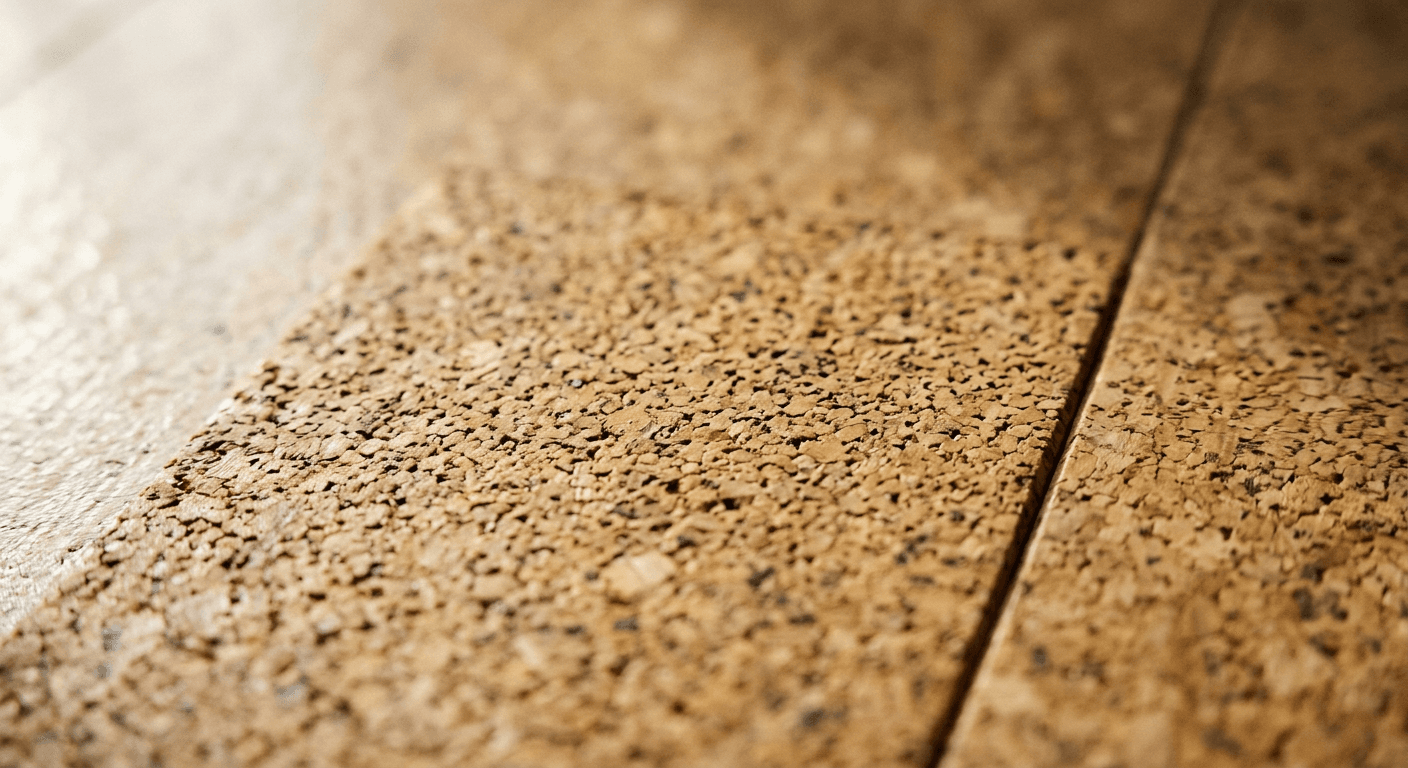
Cork has a cellular structure that contributes to its cushioning and its acoustic properties. Finished cork floors come in different colors, patterns, constructions and surface finishes. Some products show off the natural cork look, while others have decorative surfaces.
Cork flooring is not the same thing as cork underlayment, which is a thin layer installed beneath another flooring material. This page is about cork as the finished floor you walk on.
Benefits of Cork Flooring
What cork does well, described honestly. Results always depend on the specific product you choose.
Comfort underfoot
Cork has natural resilience, so it can feel less rigid than tile or conventional hardwood when you stand on it for a while.
Sound reduction
Cork can help reduce footstep and impact noise. How much depends on the product, its thickness and how the floor is assembled.
Warmth
Cork has insulating properties, which many people find comfortable in bedrooms and living spaces.
Renewable material
The bark of the cork oak can be harvested repeatedly without felling the tree, because the bark grows back.
Natural appearance
Cork has a distinctive texture and warm character, in finishes that range from natural speckle to decorative looks.
Versatility
With the right product selected, cork works in several residential applications. Product choice is what decides where it fits.
What Are the Downsides of Cork Flooring?
Cork is a good fit for some homes and a poor fit for others. Knowing the limits up front helps you choose well.
Dents from heavy loads
Heavy furniture or concentrated loads can leave dents, so furniture pads and wide-footed supports matter.
Sharp objects and grit
Sharp objects, grit and pet claws can damage the finish over time.
Not inherently waterproof
Cork is a natural material. Standing water and excessive moisture can damage certain cork products.
Humidity and temperature
Changes in humidity and temperature can make cork expand or contract, which is why the indoor environment matters.
Sunlight
Prolonged direct sunlight can cause discoloration, particularly in rooms with large south- or west-facing windows.
Availability and pricing
Product availability and pricing vary by manufacturer and construction, so it pays to compare options.
Finish upkeep
Depending on the product, the finish may need periodic maintenance or refinishing. Check the manufacturer’s instructions.
None of this rules cork out. How well a cork floor performs depends on the quality of the product, its protective finish, the installation and the care it gets afterward.
Where Should Cork Flooring Be Installed?
A room-by-room guide. Some specialized cork products have different approved applications, and the manufacturer’s instructions always take precedence.


Photos on this page are illustrative examples of cork flooring, not Skyview Flooring projects.
Great candidates
- Bedrooms
- Living rooms
- Home offices
- Libraries and reading rooms
- Playrooms, with realistic expectations for wear
Suitable with additional consideration
- Kitchens, depending on the product’s moisture approval, finish and maintenance requirements
- Hallways and busy living areas, depending on wear rating and surface protection
Generally more challenging
- Full bathrooms and other frequently wet rooms
- Laundry rooms exposed to leaks or standing water
- Damp basements
- Unconditioned spaces
- Areas exposed to prolonged intense sunlight
Is Cork Flooring a Good Choice for Homes in the Pacific Northwest?
It can be. Vancouver’s wet weather is mostly an outdoor fact, and rain on its own does not make cork a poor choice inside. What matters is the condition of the home: indoor humidity through our damp winters, moisture in the subfloor, and how the flooring was acclimated before it was installed.
That is why we pay attention to the subfloor. Concrete slabs typically call for moisture testing, wood subfloors need to be flat and sound, and rooms near water sources, like bathrooms and laundry rooms, deserve extra caution. Cork tends to suit conditioned living spaces with a dry, flat subfloor, where humidity stays fairly steady through the seasons.
If you are unsure about a particular room, ask us. We can look at the space and the product you are considering and tell you what we see before you buy. If a room needs extra subfloor preparation or leveling, we will say so in the estimate.
Cork Flooring Installation Methods
Cork flooring is not installed one single way. The method depends on the product you choose.
Floating Click-Lock Cork Flooring
Click-lock cork planks connect to each other through a locking system and float over an approved, prepared subfloor. They are not fastened to it.
Advantages
- Generally faster and less labor-intensive to install
- Does not require full-spread adhesive
- Often a practical choice for residential renovations
- Can sometimes be installed over approved existing substrates
- Individual plank replacement may be possible, depending on the locking system and location
Disadvantages
- Requires perimeter expansion gaps
- Some floating products contain moisture-sensitive fiberboard cores
- May sound more hollow than a directly bonded floor, depending on the product and subfloor
- Fixed cabinetry, heavy fixtures and other restrictions must follow manufacturer requirements
Best applications
Bedrooms, living rooms, home offices and other dry, climate-controlled residential spaces.
Things we look at for a floating cork installation:
- An expansion gap around the perimeter, so the floor can move with changes in humidity
- Underlayment, where the manufacturer requires it
- A subfloor that is flat within the manufacturer’s tolerance
- Moisture requirements for the subfloor, including a moisture barrier where one is called for
- Manufacturer-specific installation procedures
Glue-Down Cork Flooring
Glue-down cork tiles are adhered directly to a properly prepared substrate with a manufacturer-approved adhesive.
Advantages
- Directly bonded to the prepared substrate, which gives a firm feel underfoot
- Can be useful for particular design patterns and certain manufacturer-approved commercial applications
- Some glue-down cork products can be recoated or refinished, depending on their thickness, construction and finish
- Does not behave like a floating floor, although movement joints and other installation requirements may still apply
Disadvantages
- Requires more extensive and precise substrate preparation
- Adhesive selection and moisture testing are critical
- Typically more labor-intensive to install
- More difficult to remove or replace
- Some products require finishing or sealing after installation
Best applications
Projects where a direct-bond installation is specified, certain commercial spaces, and homeowners seeking a particular cork tile design.
Things we look at for a glue-down cork installation:
- A smooth, clean substrate, because glue-down tiles can show surface imperfections
- Moisture testing of the substrate
- Adhesive compatibility with both the product and the subfloor
- Any finishing or sealing the product calls for after installation
- Manufacturer-specific installation procedures
Send us the exact product you are considering and we will review its installation instructions before we give you an estimate.
Which Cork Flooring Installation Method Is Right for You?
For a typical residential project, floating click-lock cork is often the more practical and economical choice. Glue-down cork can be preferable when the specific product, design or application calls for a directly bonded installation.
Floating often fits when…
- It is a typical residential renovation
- The space is a bedroom, living room, home office or other dry, climate-controlled room
- You want a practical, economical installation
Glue-down may fit when…
- The product you chose is specified for direct-bond installation
- The design or cork tile pattern you want calls for it
- The application, such as certain commercial spaces, calls for it
Important: neither system is automatically waterproof, more durable or suitable for every subfloor. Manufacturer specifications, moisture conditions and intended use determine what is suitable for your project.
Send us the cork product you are considering
Send Skyview Flooring the exact cork flooring product you are thinking about and we will review its installation requirements, so you know which method applies before you buy.
Cork Flooring Installation Cost
Floating Cork Flooring Installation — Approximately $4.50 per Square Foot
Preliminary estimate for floating click-lock cork. Cork flooring materials are not included.
This estimate includes
- Professional installation of floating click-lock cork flooring
- Standard subfloor preparation
- Removal of existing carpet or floating flooring
Not included
- New cork flooring materials
- Glue-down cork installation, which is quoted separately
This is a preliminary estimate, not a guaranteed quote. Additional leveling, subfloor repairs, moisture mitigation, removal of glued-down flooring and other nonstandard work may cost extra. Final pricing is subject to project measurements, conditions and the manufacturer’s installation requirements.
Glue-down cork flooring is quoted separately. The floating estimate above does not apply to glue-down installation.
Cork Compared With Other Flooring
No floor wins every category. This is a general guide, and individual products vary.
| Feature | Cork | LVP | Laminate | Engineered hardwood |
|---|---|---|---|---|
| Comfort underfoot | Natural give; often feels softer than hard surfaces | Varies by product; an attached pad adds cushion | Firmer; underlayment adds some cushion | Firm; varies with how it is installed |
| Noise reduction | Can help reduce impact noise; depends on product and assembly | Depends on the pad or underlayment | Underlayment has a large effect on sound | Depends on the product and installation method |
| Water exposure | Not inherently waterproof; follow the manufacturer’s approved uses | Many products have a waterproof core; results depend on the product, subfloor and installation | Water-resistant products exist; standing water is a risk at seams and edges | Wood-based; avoid standing water and persistent moisture |
| Scratches and dents | Can dent under concentrated loads; finish can scratch | Wear layer resists scratches in many products; can be gouged | Hard surface resists scratches; can chip at edges | Wood can scratch and dent; some products can be refinished |
| Natural material content | Cork from tree bark; floating versions use a fiberboard core | Synthetic | Wood-fiber core with a printed surface layer | Real wood top layer over a plywood or similar core |
| Maintenance | Gentle cleaning, little water, felt pads; finish may need upkeep | Simple sweeping and cleaning per the manufacturer | Dry or lightly damp cleaning | Sweeping and approved cleaners; refinishing depends on the wear layer |
| Best-use rooms | Bedrooms, living rooms, home offices | Kitchens, baths and basements, depending on the product | Bedrooms, living areas, hallways | Living areas and bedrooms in dry, conditioned spaces |
Scroll sideways to see every column.
Our Professional Installation Process
We follow the manufacturer’s requirements for your product. Not every cork product can be installed over every existing floor, so we check first. If extra subfloor preparation or moisture mitigation is needed, we evaluate it and include it in the estimate as appropriate.
Consultation and Measurements
We talk through your project, look at the space and take measurements.
Product and Method Review
We review your selected product and its installation method: floating click-lock or glue-down.
Subfloor Evaluation
We evaluate the subfloor for flatness and condition, and prepare it as the product requires.
Installation
We install following the manufacturer’s requirements for your specific product.
Final Inspection and Cleanup
We inspect the finished floor, clean up and walk through the result with you.
Cork Flooring Maintenance
Cork does not need much, but a few habits protect the finish.
- Sweep or vacuum regularly, using equipment that will not scratch the surface. Avoid hard-bristle or beater-bar attachments.
- Use the cleaning method the manufacturer approves for your product.
- Avoid standing water and excessive wet mopping, and wipe up spills promptly.
- Put felt pads under furniture legs.
- Protect the floor beneath rolling desk chairs with a mat or suitable chair casters.
- Consider blinds or window coverings in rooms that get strong direct sunlight.
- Keep indoor temperature and humidity within the range the manufacturer recommends.
- Follow the manufacturer’s finish and warranty instructions.
Cork Flooring FAQs
Related Services
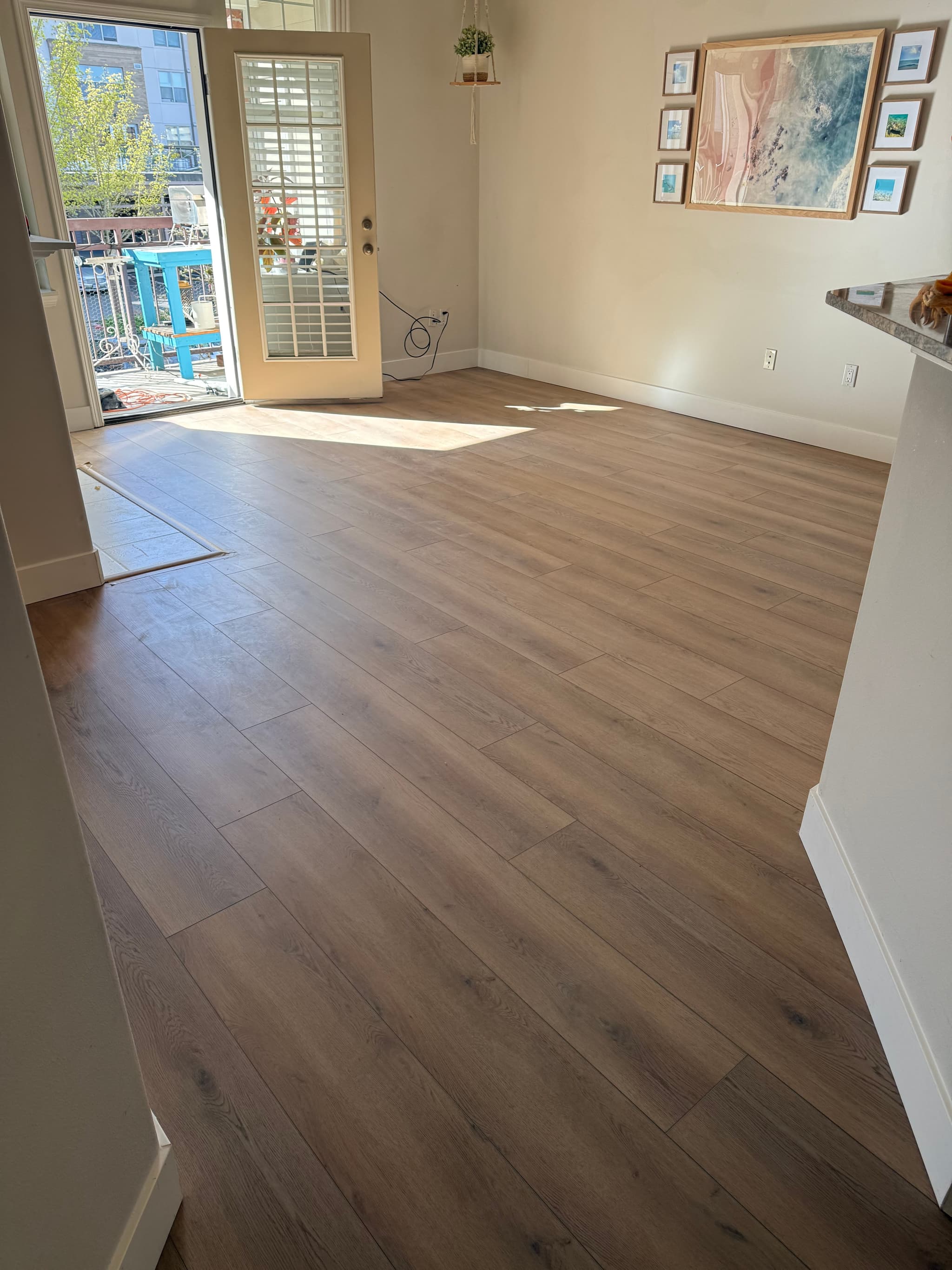
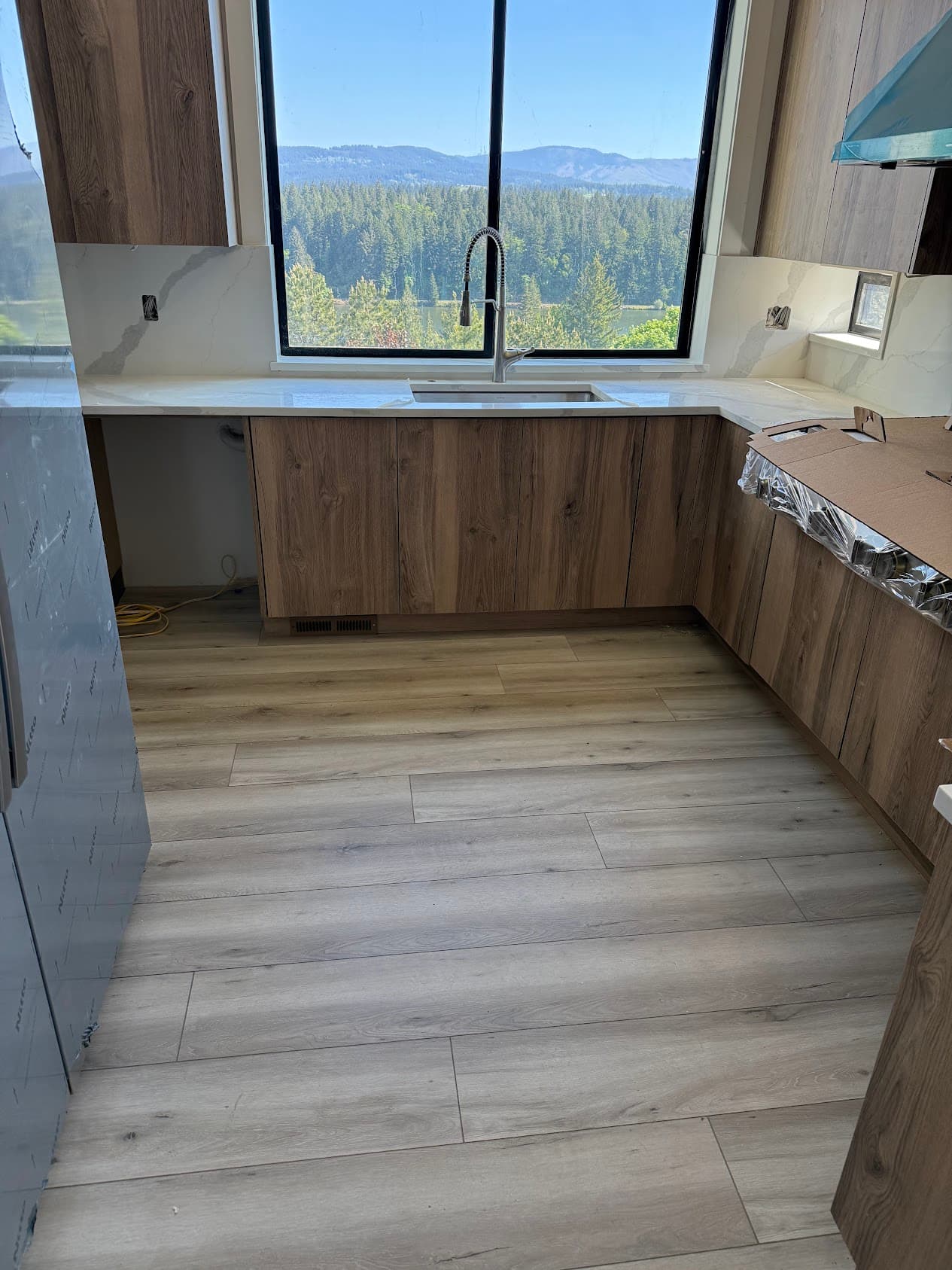
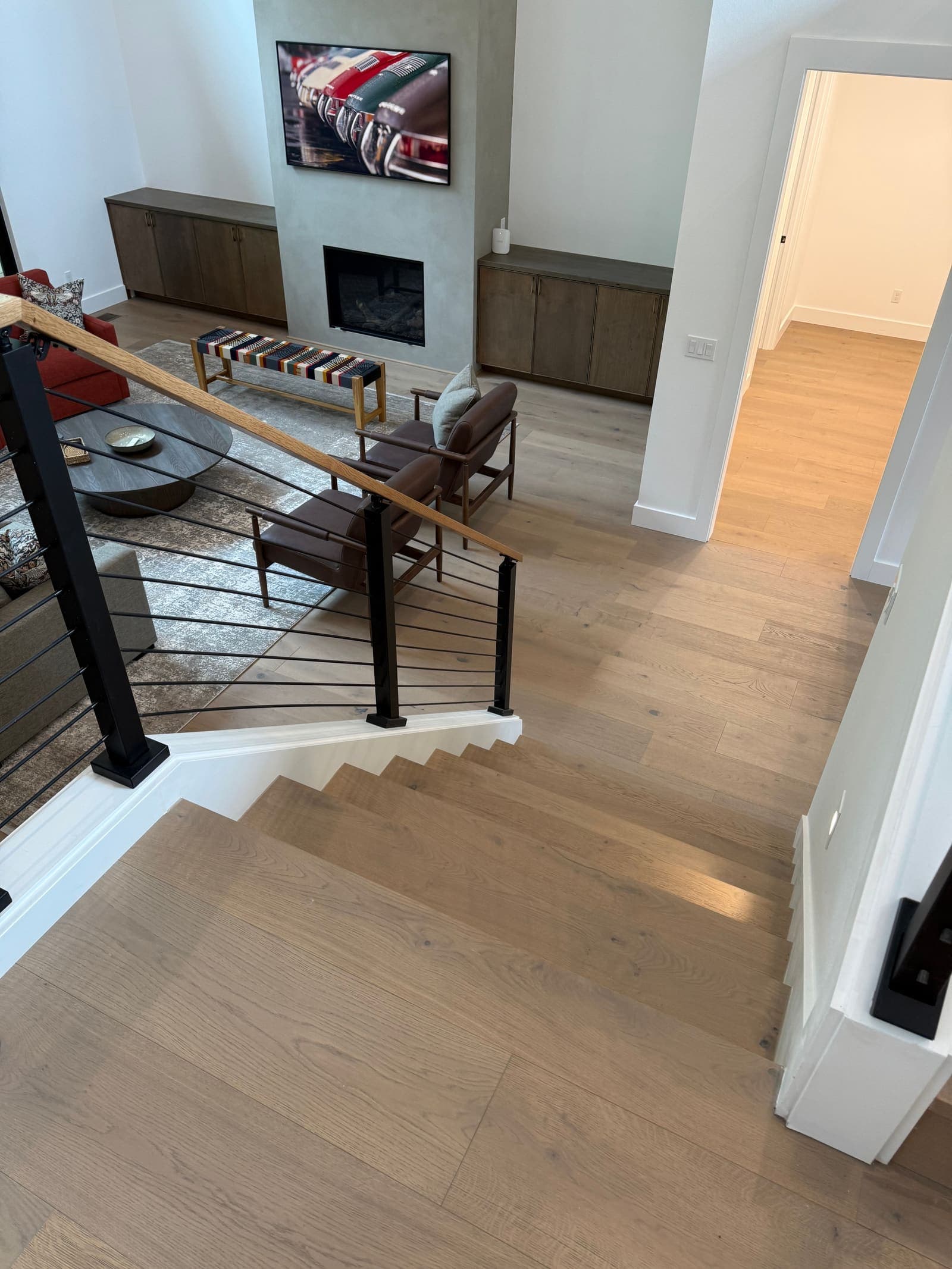
Other flooring installation services we offer, including baseboard installation to finish the room.
Considering Cork Flooring for Your Home?
Skyview Flooring can help you evaluate the installation requirements for your selected cork flooring and provide an estimate for your project.