Solid vs. Engineered Hardwood: Which Is Right for Your Home?
Choosing between solid and engineered hardwood is one of the most common questions we hear from homeowners in Vancouver, WA and the Portland metro. Both are real wood — the difference comes down to construction, where they can be installed, and how they hold up over time.
Here's an honest, no-pressure breakdown to help you decide.
What Is Solid Hardwood?
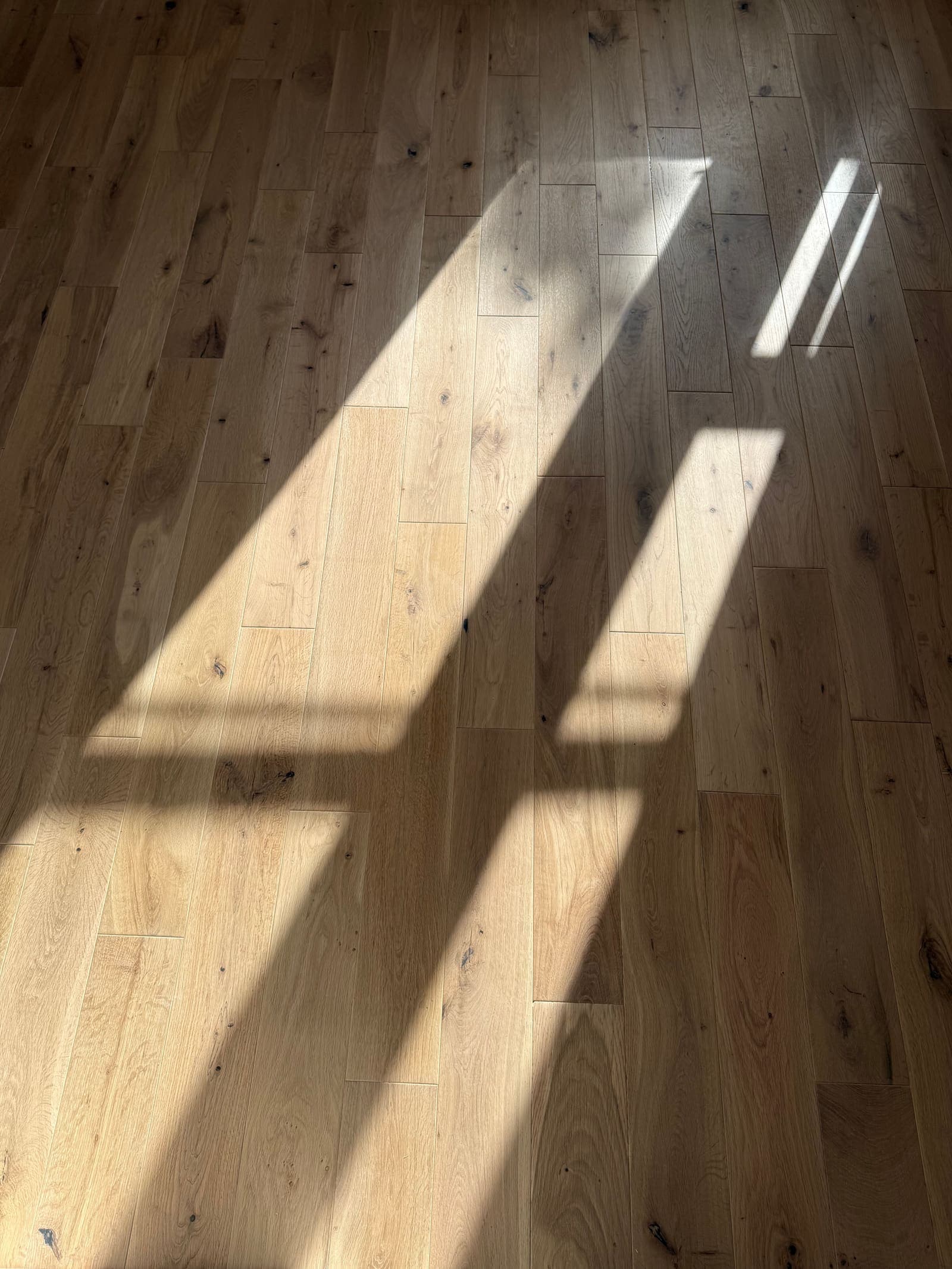
Solid hardwood is exactly what it sounds like — one solid piece of wood, milled from a single board, top to bottom. There's no layering, no plywood core, just real hardwood all the way through.
Why homeowners choose solid hardwood
Where it works best
- On-grade and above-grade rooms (living rooms, bedrooms, dining rooms)
- Homes without major humidity swings
- Staircases, where solid hardwood is standard practice
Where it struggles
- Basements and below-grade spaces (moisture risk)
- Over concrete slabs (without additional prep)
- Bathrooms, kitchens, or other high-moisture rooms
- Homes in humid climates or with radiant heat, where expansion and contraction can cause warping
Where it works best
- Basements and below-grade rooms
- Homes over concrete slabs
- Homes with radiant heat systems
- Kitchens and other rooms with more humidity than a typical living space
Where it's more limited
- Can typically be refinished fewer times than solid hardwood (depending on wear-layer thickness)
- Slightly less “all wood” feel underfoot for buyers who prioritize that specifically
What Is Engineered Hardwood?
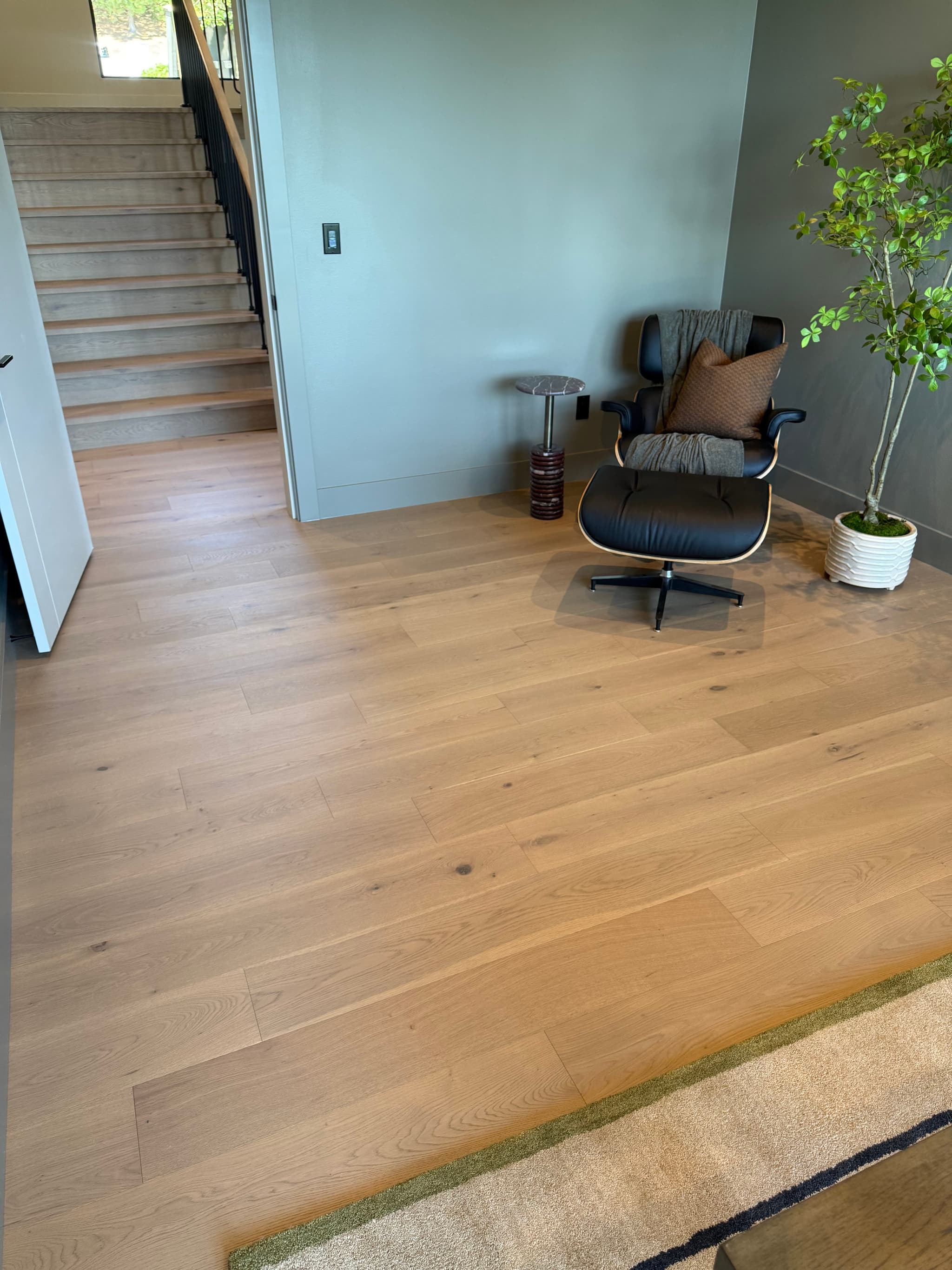
Engineered hardwood has a real hardwood surface layer — the same wood species you'd get with solid hardwood — bonded over a stable plywood or high-density core. You get the authentic look and feel of real wood on top, with a construction built to handle conditions solid hardwood can't.
Why homeowners choose engineered hardwood
Quick Comparison
Side by side, here's how solid and engineered hardwood stack up.
| Feature | Solid Hardwood | Engineered Hardwood |
|---|---|---|
| Construction | 100% solid wood | Real wood layer over stable core |
| Refinishing | 4-6 times | Fewer times (varies by wear layer) |
| Below-grade/basements | Not recommended | Yes |
| Over concrete slabs | Not recommended without extra prep | Yes |
| Radiant heat compatible | Generally no | Yes |
| Humidity stability | Lower | Higher |
| Best for | Main-level living spaces, staircases | Basements, slabs, radiant heat, humid rooms |
So Which One Is Right for You?
If you're flooring a main-level living room or staircase in a typical Pacific Northwest home, solid hardwood is a great, time-tested choice. If you're working with a basement, a concrete slab, radiant heat, or a room with more humidity, engineered hardwood is almost always the better-performing option — without giving up the real wood look.
The honest answer is that both are excellent, genuine hardwood products — the right choice depends on where in your home you're installing it. We install both oak, hickory, maple, and walnut in solid or engineered form, with wide plank options available.
Not Sure Which Fits Your Space?
We offer free in-home estimates and will walk you through your specific room, subfloor, and options honestly — no pressure, no upsell. Contact us to schedule yours.
Skyview Flooring LLC — family-owned, installation-only flooring contractor serving Vancouver, WA and the Portland metro since 2007. Licensed in WA & OR. BBB A+ Accredited. 5.0 rating on Google.