Stair Flooring Installation With Hardwood Done Right
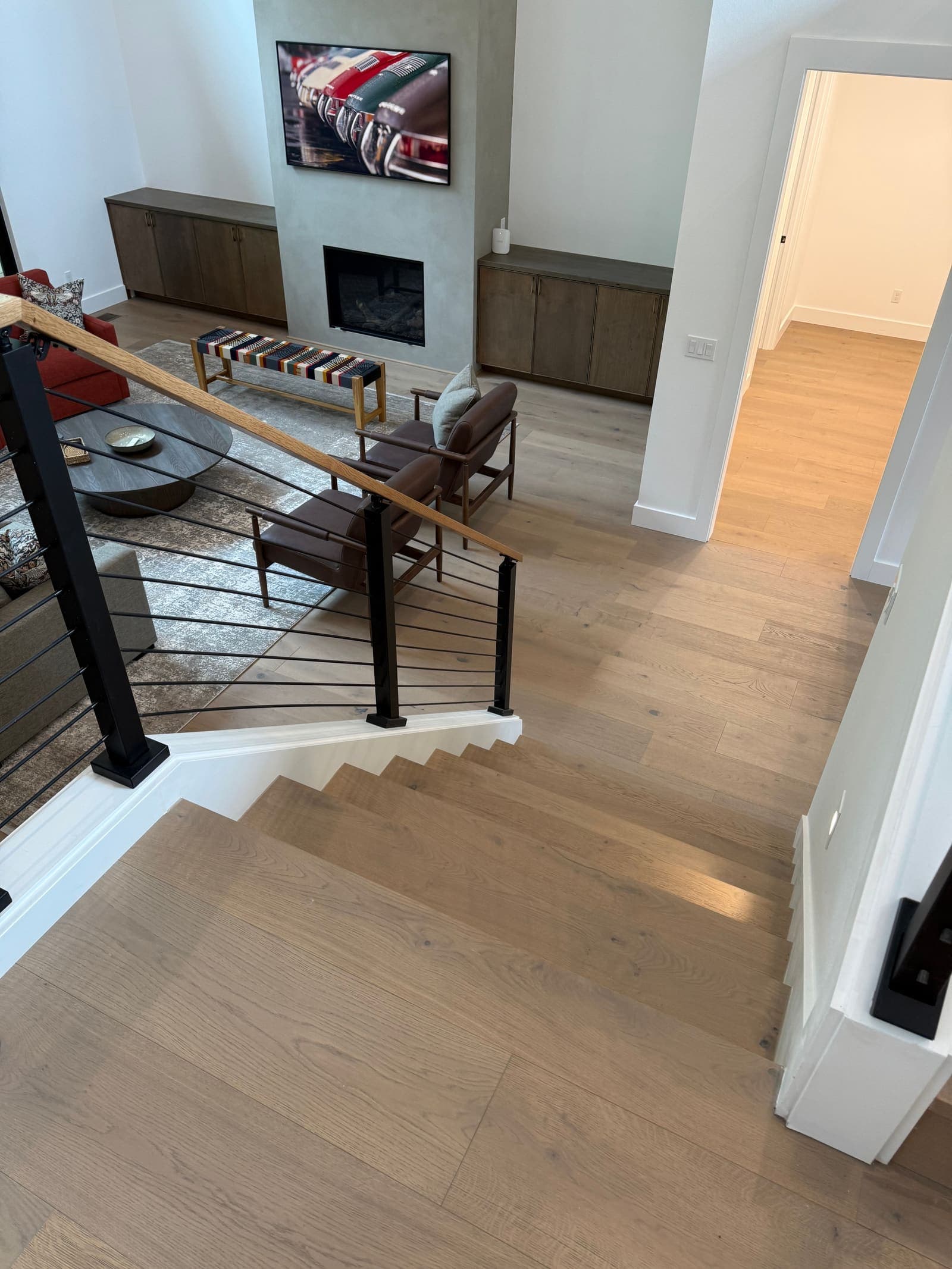
Planning stair flooring installation with hardwood in Vancouver, WA? Replacing carpeted stairs can transform your entryway, but the finished result depends on more than the wood color. Each tread, riser, stair nose, and landing needs careful preparation, accurate fitting, and an installation method suited to the selected materials.
Planning Hardwood Stairs in Vancouver and the Portland Area
Skyview Flooring provides hardwood stair installation in Vancouver, WA, and the surrounding Vancouver–Portland area. Our family-owned company has served the area since 2007, helping homeowners coordinate flooring, custom stair noses, and the details that connect one level of a home to another.
If you are considering hardwood stairs, here is what to plan before ordering materials or scheduling installation.
What Does Stair Flooring Installation With Hardwood Include?
The scope depends on the existing staircase and the finish you want. A project may include:
- Removing existing carpet, pad, tack strips, and staples.
- Preparing the existing stair surfaces.
- Installing hardwood treads or an approved flooring-and-nosing system.
- Installing matching or painted risers.
- Fabricating custom stair noses where suitable.
- Finishing exposed sides with appropriate returns.
- Connecting the staircase to flooring at the upper and lower landings.
These details should be identified in the estimate. A price for installing flooring on the steps does not necessarily include new risers, painting, railing changes, or structural repairs.
Before comparing bids, make sure each contractor is pricing the same work.
Choosing the Look: Matching Wood or Painted Risers?
Two popular approaches are matching wood treads and risers, or wood treads paired with painted risers. Neither option is automatically better. The right choice depends on the surrounding finishes and how you want the staircase to look within the home.
- Hardwood treads with matching wood risers — Matching wood can create a continuous appearance, particularly when hardwood flooring connects the entryway, stairs, and upstairs landing. Natural wood varies in grain and color, so the finished staircase will not look perfectly uniform. Thoughtful material selection and layout help distribute that variation across the steps.
- Hardwood treads with painted risers — Painted risers create contrast and can coordinate with white baseboards, trim, and stair skirts. This approach keeps the wood prominent on the walking surface while giving the staircase a lighter appearance. Painted risers may show shoe marks and need occasional touch-up. Confirm whether supplying, preparing, and painting the risers is included in your estimate.
Choosing Hardwood and Stair Components
Solid hardwood treads and suitable engineered hardwood systems can both be options, depending on the staircase and the selected products.
The important distinction is that flooring approved for a room is not automatically approved for use on stairs. Before purchasing, confirm the complete installation system, including the tread surface, stair nose, adhesive, and any required fasteners.
Questions worth answering include:
- Is the selected product suitable for stair use?
- Are compatible stair noses available?
- Will the stair nose sit flush with the tread surface or overlap it?
- Does the staircase have exposed sides that need finished returns?
- What preparation does the existing stair surface require?
- How will the finished stairs meet the landings?
- What installation and curing requirements apply?
A floating floor installation in a room does not mean the material can also float on the staircase. Stair components need to be secured using the method approved for the specific system.
Skyview Flooring can discuss material supply or work with suitable flooring you purchase separately. If you already have a product in mind, send us its name, a link, and any available installation instructions before ordering. Checking compatibility early can prevent a project from being delayed by unsuitable flooring or missing stair pieces.
Custom Stair Noses: Why Planning Matters
The stair nose is the finished front edge of each step. It is one of the most visible and frequently used parts of the staircase.
Skyview Flooring can discuss custom stair-nose fabrication where appropriate for the selected material and stair design. This can be useful when coordinating the staircase with the adjoining floor.
Custom fabrication still requires planning. The material, edge construction, dimensions, finish, and attachment method all need to suit the application. It is not something to assume can be made from every flooring product.
Factory-made coordinating pieces also deserve a close look. A matching color name does not always mean identical grain, sheen, or appearance. Reviewing the available components before installation helps establish realistic expectations.
What Are Stair Returns?
A return finishes the side edge of a tread when that side is exposed rather than enclosed by a wall or stair skirt.
Your staircase may require left-side, right-side, or double returns. Photos showing both sides of the staircase help identify these details during the estimate process.
Stair Preparation and Height Consistency
Removing carpet often reveals conditions that were difficult to see beforehand. Existing steps may have loose surface materials, leftover fasteners, uneven areas, or damage requiring further assessment.
The installation base needs to be suitable before new hardwood is attached. Covering movement with new flooring does not resolve its cause.
Finished heights also need careful planning. Adding material changes the relationship between each tread and the landings. The top and bottom steps are particularly important because their finished heights depend on the flooring at both levels.
The project should account for applicable stair requirements, consistent finished geometry, and the selected installation system. This is one reason stair work should be considered alongside the surrounding flooring.
Structural Repairs Are a Separate Scope
Skyview Flooring can assess flooring-related preparation and discuss suitable surface or subfloor repairs. Joist and structural framing repairs are outside our scope.
If the staircase shows signs of damaged framing, inadequate support, or another structural concern, a qualified contractor will need to evaluate and address it before flooring installation proceeds.
Moisture, Acclimation, and Installation Methods
Wood responds to its environment, including changes in indoor humidity. For homes in Vancouver and the Portland area, the relevant conditions are inside the building and within the installation materials, not simply whether it is raining outside.
Follow the flooring and stair-component manufacturers' requirements for:
- Delivery and storage.
- Acclimation, where required.
- Indoor temperature and humidity.
- Substrate moisture and preparation.
- Adhesives and fasteners.
- Curing time and access restrictions.
There is no universal acclimation period or attachment method for every hardwood stair product.
Similarly, glue assist, full-spread adhesive, and mechanical fastening are not interchangeable choices. The approved system should guide the installation.
Connecting the Stairs to the Rest of the Home
A staircase rarely stands alone. Its appearance depends on how it meets the entryway, upstairs hallway, carpeted bedrooms, and surrounding trim.
On a Forest Heights project in Portland, Skyview Flooring installed engineered hardwood on the main floor, completed custom stair noses, and installed carpet upstairs. That combination highlights the importance of planning the different surfaces together.
When discussing your project, include the flooring at both landings, even if you only want work completed on the stairs. Existing floor heights and transitions can influence the stair details.
If you are also choosing flooring for adjoining rooms, our solid vs. engineered hardwood guide explains the differences between the two options.
What Affects Hardwood Stair Installation Cost?
The number of steps is a starting point, but it does not describe the complete project.
Pricing may depend on:
- Stair width and shape.
- Straight steps, landings, or angled steps.
- Existing flooring removal.
- Material selection and supply.
- Factory-made or custom stair noses.
- Exposed sides and finished returns.
- Matching wood or painted risers.
- Surface preparation and repairs.
- Connections to upper and lower flooring.
- Access and scheduling requirements.
Railing or baluster work can also affect the project and should be discussed separately rather than assumed to be included.
For an initial labor ballpark, visit our Flooring Installation Cost Calculator. The calculator estimates labor and selected additional services; flooring materials are excluded. Custom stair details require a project-specific quote.
What to Expect During Installation
The staircase may be the only route between levels, so access needs to be planned before work begins.
Discuss whether anyone needs regular upstairs access, whether pets or children will be present, and whether alternate arrangements are necessary. Access cannot always be maintained while steps are being completed or adhesives are curing.
Preparation may include removing the old coverings, extracting staples and fasteners, cleaning the stair surfaces, and completing the agreed repairs. The new components are then fitted and installed using the selected system.
Before using the finished stairs, follow the installer's instructions for foot traffic, furniture movement, and any adhesive-curing restrictions.
Hardwood Stair Safety and Everyday Care
A staircase's practical use matters as much as its appearance. Consider lighting, handrails, household footwear, tread condition, and the suitability of the selected surface.
Do not assume that a matte finish is automatically less slippery than a glossy one. Finish sheen alone does not establish traction. Discuss the specific product and intended use, especially if children, older adults, or pets regularly use the stairs.
After installation:
- Remove grit and debris regularly.
- Clean spills promptly.
- Use cleaning products approved for the finish.
- Avoid waxes or polishes that the manufacturer does not recommend.
- Keep the staircase clear of loose objects.
- Have loose components or damaged edges assessed promptly.
If you want a carpet runner over hardwood, discuss that before finalizing the stair design. Runner material, edge finishing, and secure attachment need their own plan.
Common Questions About Hardwood Stairs
- Can you replace carpeted stairs with hardwood? — Often, yes. The existing stair construction, finished dimensions, material compatibility, and required preparation need to be evaluated first. Removing the carpet may reveal conditions that affect the final scope.
- Will the stairs match my existing hardwood exactly? — An exact match cannot always be guaranteed. Wood species, stain, finish, age, sunlight exposure, and natural variation can all affect appearance. If matching matters, provide the original flooring information and any spare boards or samples available.
- Can you install flooring I already purchased? — Skyview can work with suitable customer-supplied material. Send the product information before scheduling so we can review stair compatibility and identify the necessary components.
- Does new hardwood eliminate stair squeaks? — Not automatically. Some noises relate to accessible surface fastening; others come from the underlying structure. The cause needs assessment, and structural repairs may require another contractor.
Request a Hardwood Stair Installation Estimate
Planning hardwood stairs in Vancouver, Camas, Battle Ground, Ridgefield, Washougal, or the Portland area? Skyview Flooring can help you coordinate the material, custom stair noses, risers, and adjoining floors.
To get started, send us:
- Your city.
- The number of steps and approximate stair width.
- Photos showing the full staircase.
- Photos of exposed sides and the top and bottom landings.
- Product details if you have already selected flooring.
- Your preference for matching wood or painted risers.
Call (360) 852-0707 or request a free estimate. We will review the details with you and discuss the next steps for your staircase.